Thursday, March 19, 2020

Beautiful Spring Flowers In Chester & York Counties (SC)

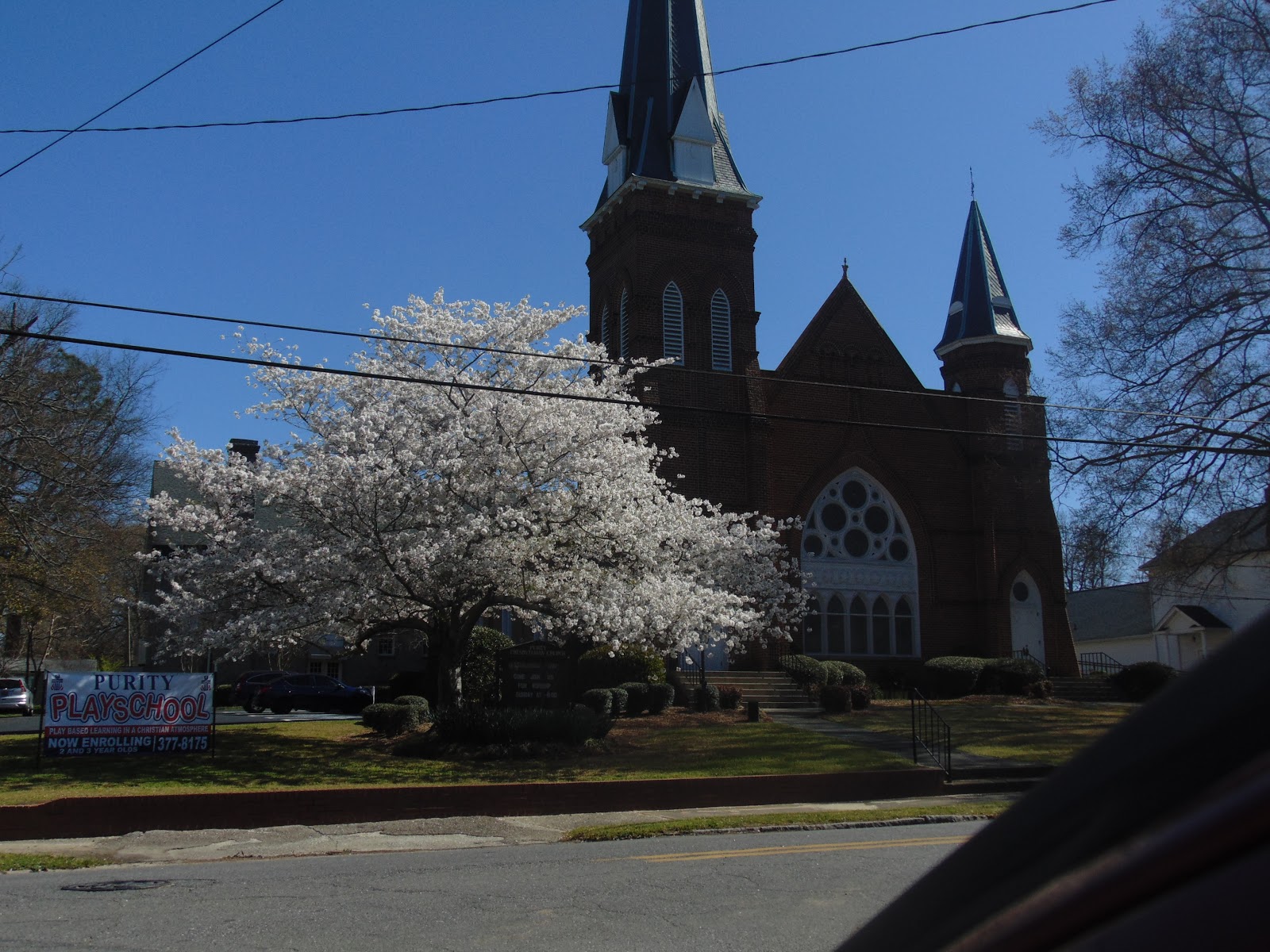
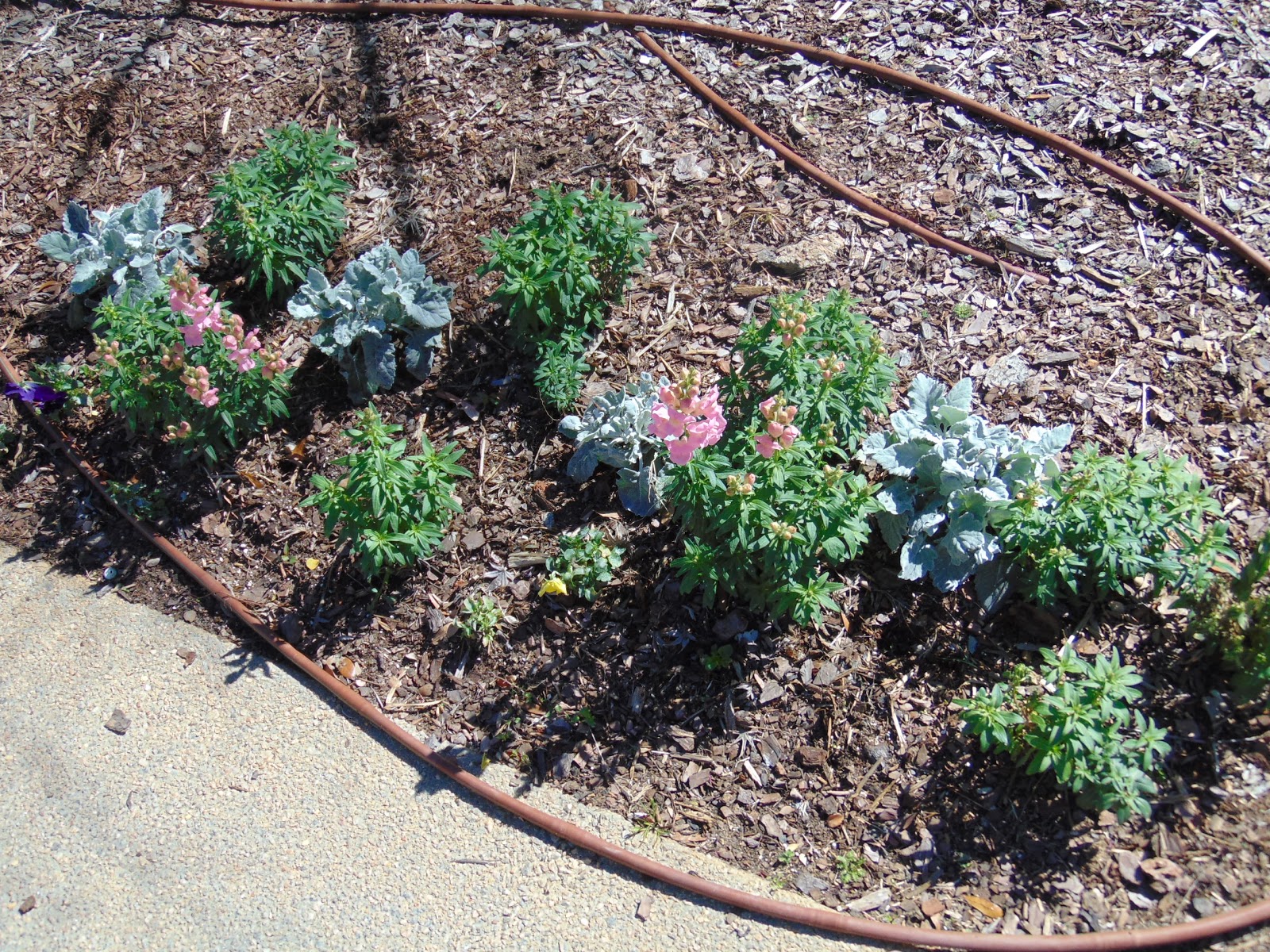
Today is the first day of spring of 2020 here in upstate South Carolina. Here are some photos I took of the beautiful spring flowers and blooms popping up in Chester and York Counties. I hope y'all enjoy them as much as I enjoy bringing you these lovely visuals.


Monday, March 16, 2020

Brigadier General John Dunovant C.S.A. -- Chester County's Confederate General

Brigadier General John Dunovant CSA
(March 5, 1825 - October 1, 1864).
Photo courtesy Chester County (SC) Library.


Located about 3 miles southeast of Chester, South Carolina on inaccessible private land hidden from SC Highway 9 is a small family cemetery that includes the final resting place of Brigadier General John Dunovant, the only Confederate general buried in Chester County.

John Dunovant was born on Saturday, March 5, 1825 to John
Dunovant (1787 - 1855) and Margaret Sloan Quay Dunovant (1797 - 1843) of Chester District (Chester County), South Carolina. He was the fourth child of seven siblings: Ann Dunovant Henderson (1814 - 1841), Alexander Quay Dunovant (1815 - 1868), Robert G. M. Dunovant (1821 - 1898), Margaret Dunovant (1826 - 1919), Thomas Jefferson Dunovant (1828 - 1864), and Clara Laluke Dunovant Minter (1830 - 1914).

All of the Dunovant brothers would serve in the Confederate army. Of the four brothers, John and his younger brother, Thomas, would both die in defense of Southern independence.

His other two brothers:
Alexander Quay Dunovant and Robert Gill Mills Dunovant (also a Confederate brigadier general), were both elected as delegates from Chester District to the Secession Convention in Charleston and both signed the South Carolina Ordinance of Secession in December of 1860. Alexander would later serve as a Confederate colonel and aide-to-camp to South Carolina Governor Francis W. Pickens.

A veteran of the Mexican-American War (1846 - 1848) Dunovant served as a 3rd sergeant in the distinguished Palmetto Regiment of the South Carolina Volunteers and was wounded at the Battle of Chapultepec
during the fighting at the Belen Gate on Monday, September 13, 1847, where the Palmetto Regiment's flag became the first American (U.S.) colors to fly over Mexico City. Dunovant was mustered out of the Palmetto Volunteers on Tuesday, December 7, 1847.

Among other lower-ranking U.S. officers present at the battle with Dunovant who later became generals in the upcoming American Civil War over a decade later, included: Daniel H. Hill, George Pickett, James Longstreet,
Ulysess S. Grant, Thomas Jackson, and Robert E. Lee.

Dunovant was later commissioned directly into the regular peacetime U. S. Army as a captain of the 10th Infantry Regiment on Saturday, March 3, 1855 when that unit was organized as a new regiment. He served in that post for five years before he resigned from the U.S. Army on Saturday, December 29, 1860, nine days after South Carolina seceded from the Union on December 20th.


He offered his services and was commissioned by the government of South Carolina a major of the State militia
during the initial Confederate operations against Fort Sumter in Charleston harbor. He was present at Fort Moultrie on Sullivan's Island when the War Between The States began on the early morning hours of Friday, April 12, 1861 with the barrage on Fort Sumter.

On Monday, July 22, 1861, Dunovant became colonel
of the 1st South Carolina Regular Infantry and was stationed in Charleston between 1861 - 1862. While the details are hazy,
he was cashiered and dismissed from service for drunkenness on Saturday, November 8, 1862. Later on Tuesday, July 28, 1863 he was given another chance and reinstated by Governor Pickens (likely at the request of his brother, Alexander) to command as colonel of the 5th South Carolina Cavalry Regiment.

He served the State of South Carolina in this capacity, until ordered to the State of Virginia in early 1864 and his regiment placed under
the brigade command of Brigadier General Matthew C. Butler in the cavalry division under Lieutenant General Wade Hampton III. Hampton recently assumed overall command of the Army of Northern Virginia's cavalry corps following the death of Major General Jeb Stuart at the Battle of Yellow Tavern on Wednesday, May 11, 1864.

The 5th SC Cavalry fought its first major action with the Army of Northern Virginia at the Second Battle of Drewry's Bluff on Monday, May 16, 1864.
Brigadier General Matt Whitaker Ransom reported the regiment under Dunovant's leadership did admirable service at the battle. He was wounded in the left hand at the Battle of Haw's Shop on Saturday, May 28, 1864.

Dunovant continued to provide gallant services with Butler's brigade at the Battle of Cold Harbor (
May 31 - June 12, 1864), Battle of Trevilian Station (June 11 - 12, 1864) and other engagements in the Overland Campaign and early Siege of Petersburg in encounters with Union general Philip Sheridan's cavalry.

On Tuesday, August 2, 1864, Confederate President Jefferson Davis recommended to General Robert E. Lee, that Dunovant receive a promotion to brigadier general with temporary rank, which Lee supported. Later that month on Monday, August 22, 1864, Dunovant became a brigade commander under General Hampton and remained so until his death six weeks later.


John Dunovant would be killed in action the following day on Saturday, October 1, 1864 during the Battle of Vaughan Road.
He was shot down while leading a cavalry charge against the Union position.

The day before, on the evening of Friday, September 30th, Dunovant unwittingly jeopardized his reputation again while personally leading a regiment on a night patrol up Vaughan Road while attempting to recover ground lost to the Confederates north of the James River during the first day of the Battle of Peeble's Farm (September 30 - October 2, 1864) -- a part of the Siege of Petersburg
.

His force encountered a Yankee cavalry brigade commanded by Union Brigadier General Henry E. Davies. As Dunovant's and Davies's brigades approached Armstrong's house, they were surprised to encounter the other troops. The Union troops began to deploy but Dunovant actually thought he had encountered Confederate pickets and tried to force his way through the pickets.

Challenged by pickets that his officers realized were Union soldiers, Dunovant insisted that the pickets allow his men to pass. Then he sent an aide ahead to identify his command and convince the pickets to allow his force through. The Union soldiers took the captain prisoner. Only after the officer had been captured and the Union pickets began to fire into the darkness that Dunovant could be convinced of his mistake. In confused attacking and firing in the dark, only a few casualties were suffered by both sides but Dunovant's men pulled back and he was humiliated having being taken by surprise.


The next day, Major General Butler wanted to turn the Union flank believing that the Union position was too strongly defended.
Dunovant urged that the frontal attack be renewed and after initially rejecting the idea, Butler only reluctantly agreed after Dunovant's insistence on a frontal charge.

Were Dunovant's rash action was motivated by his wounded pride at losing the position the night before, and to further redeem his reputation following his alcohol problems earlier in the war? Or did he believe that his rash plan was the best one available to the Confederates at the time? Or perhaps were they motivated by a bit of both? There is no way to know for certain.

It was during this ill-advised charge against the Davies' lines that Union Sergeant
James T. Clancy of the 1st New Jersey Volunteer Cavalry fired the fateful shot that struck Dunovant in the chest and killing him before he fell off his horse. Seeing their general go down, the Confederate troopers were demoralized and quickly retreated. Upon learning that Dunovant fell in the battle, General Hampton sent his medical director, John B. Fontaine, to try to help Dunovant but he was killed by a shell on his way to the general's position.

According to another conflicting eyewitness account, Dunovant was shot in the head and his body taken to the rear by the retreating Confederates. The account reads as follows:


"Near Poplar Springs Col. John Dunovant was leading a charge. He was on his horse. We were dismounted. He was shot from his horse by the enemy. I saw him when he fell and tried to get to him to take him from the charger, but others ahead of me removed him to the rear. I saw him breathe his last. He was shot directly in the forehead with a minnie ball." 
~ Private John Walter Sawyer, Co. F, 5th S.C. Cavalry Regiment 

The Battle of Vaughan Road would end with a Union victory. Dunovant's death was one of the key factors leading to a Union victory in the engagement as it disconcerted his brigade and led to a delay in further attacks. This gave Davies time to move his men to an even stronger fortified position. After the war ended, U.S. President Andrew Johnson awarded the Medal of Honor to Sergeant Clancy on July 3, 1865.

Upon receipt of the news of both Dunovant and Dr. Fontaine's deaths in the battle, General Lee replied to General Hampton: "I grieve with you at the loss of General Dunovant and Dr. Fontaine, two officers whom it will be difficult to replace."

Brigadier General John Dunovant is buried in the Dunovant family burial ground along with his brother, Thomas Jefferson Dunovant who was also killed fighting for the Confederacy in 1864.  


The grave of Brigadier General John Dunovant CSA
in the Dunovant Family Burying Ground
just east of Chester, South Carolina.
Photo courtesy of the Chester County (SC) Library.


Deo Vindice.

Tuesday, March 10, 2020

The One Night Stand 35 Question Quiz Challenge by Princess Serenity (Special Guest Writer)

Today's blog post is a special one because, for the first time ever, I am turning over my site Southern Fried Common Sense & Stuff to a special guest writer. Yep, you heard that one right, folks! Please enjoy, and y'all make her feel right at home, ya hear?
 
"Uh my head....wait, this isn't my room?!
Where are my clothes?! Who the hell is this?!"


Hello everyone, my name is Princess Serenity and I'm here today to present you with a little quiz I wrote, The One-Night Stand 35 Question Quiz. 

A one-night stand is when you have casual sex or random hook-up with someone without any emotional commitment for a relationship, and you end up not getting together again. It might be someone you know (co-worker, someone in your social circle or activity club), or someone you just met in a bar, or some other social gathering. 

More often than not these interactions are usually brief and sometimes you never even see them again. Other times they lead to friendships, or multiple hook-ups; or even rarely into full relationships though you shouldn't go into a one-night stand expecting anything long lasting. 

When it comes to one-night stands, most men and women today just want no-strings attached sex. That can come off as pretty cold, I know. I also know from personal experience that just forgetting someone after having sex with them isn't easy for most people, especially women. You can sometimes end up making some good memories afterward depending on the person you hooked up with. 

I've only had three one-night stands in my life and all of them were pretty good ones. Now I'm a happily married woman and no I didn't meet my husband after one of them before you ask. 

I came up with this quiz after being inspired by reading other quiz challenges on other sites, including a couple here at Southern Fried Common Sense & Stuff. I came up with the questions (with just a little help from my wonderful husband, Danny) and the results listed at the end.

Please take the time to answer the questions. All of them are simple yes or no questions. Just have fun and please let me know your results in the comments section below. 

My thanks to Carl for letting me post this to his website. Have a wonderful day everybody and remember to always be safe if you are still having one-night stands. Always protect yourself and be true to your own feelings. ~Serenity


The One-Night Stand 35 Question Quiz Challenge

(1) Have you ever woken up naked in a stranger's bed? (Y/N) 

(2) Have you ever woken up naked in a stranger's bed hungover with no memory how you got there? (Y/N)

(3) Have you ever woken up from a one-night stand in a stranger's bed and the other person was not there? (Y/N) 

(4) Have you ever woken up from a one-night stand and been unable to find all of your clothes? (Y/N) 

(5) Have you ever woken up from a one-night stand in a completely strange bedroom that didn't belong to either you or your partner? (Y/N) 

(6) Have you ever had a one-night stand with a partner of the same sex? (Y/N)

(7) Have you ever had unprotected sex with a one-night stand? (Y/N)

(8) Have you ever had a one-night stand with a partner who was a childhood crush? (Y/N) 

(9) Have you ever woken up from a one-night stand alone and found out your partner stole money from you? (Y/N) 

(10) Have you ever had a partner ask you to preform BDSM sex on them during a one-night stand? (Y/N)

(11) Have you ever had a one-night stand that ended up a three-way? (Y/N)

(12) Have you ever had a one-night stand with a partner who was a virgin? (Y/N) 

(13) Have you ever had a one-night stand with a boss or coworker? (Y/N) 

(14) Have you ever woken up from a one-night stand and had a condom still attached to you (male), or stuck inside you (female)? (Y/N)

(15) Have you ever woken up from a one-night stand and snuck out on your sleeping partner? (Y/N)

(16) Have you ever had a partner sneak into your bedroom for a one-night stand? (Y/N)

(17) Have you ever had a one-night stand with an ex-romantic partner? (Y/N) 

(18) Have you ever had a one-night stand with a partner who was an enemy of yours? (Y/N) 

(19) Have you ever woken up from a one-night stand covered in rose petals? (Y/N) 

(20) Have you ever had a partner ask you to role play with them during a one-night stand? (Y/N)

(21) Have you ever had a one-night stand with a partner who was a friend of the opposite sex? (Y/N) 

(22) Have you ever had a partner ask you to preform anal sex on them during a one-night stand? (Y/N) 

(23) Have you ever had a one-night stand with a partner who was a friend or former partner of one of your siblings? (Y/N)

(24) Have you ever woken up from a one-night stand because your partner was touching you inappropriately? (Y/N) 

(25) Have you ever woken up from a one-night stand and had morning after sex with your partner? (Y/N)

(26) Have you ever taken a nude selfie of your one-night stand partner while they were still asleep? (Y/N)

(27) Have you ever had a one-night stand where you stole something from them as a momento to remember your good time? (Y/N)

(28) Have you ever had a one-night stand with a partner that was older than you by more than 5 years? (Y/N) 

(29) Have you ever shared a morning shower, or bath with a partner after a one-night stand? (Y/N)

(30) Have you ever had a one-night stand offer you breakfast the next morning? (Y/N)

(31) Have you ever had a one-night stand that ended up being more with your partner? (Y/N)

(32) Have you ever had a one-night stand share nude selfies they took of you while you were asleep? (Y/N)

(33) Have you ever had a one-night stand spread rumors and gossip about you afterwards? (Y/N)

(34) Have you ever had a one-night stand with a partner who was married? (Y/N) 

(35) Have you ever stayed in contact with someone you had a one-night stand with? (Y/N) 

Now for your quiz results:
(If you answered yes to this number of questions above)
 
1 - 7: You don't do this very often.
7 - 12: You have some experience.
12 - 20: People clearly find you attractive.
21 - 30: Been around the block more than a few times.
31 - 35: You're a total slut.


About the author: Princess Serenity (aka Usagi/Serena Tsukino, Sailor Moon) is a superhero from the Moon Kingdom and the guardian of the Earth who "fights for love and justice; who rights wrongs and triumphs over all evil in the name of the moon!"
Well, actually she's a really awesome professional female anime cosplayer from Western Tennessee who goes by that pseudonym. Serenity currently lives near Chicago, Illinois, USA with her newlywed husband and their three dogs.
This was her first time posting on this forum. 

Wednesday, March 04, 2020

The Origins Of Confederate Flag Day


(This article was reposted from March of 2017 -- and still remains relevant today.)
 
March 4th is recognized throughout the American Southland as Confederate Flag Day. 

It was on this day in 1861 that the First Confederate National Flag "The Stars and Bars" became the national banner of the Confederate States of America and was raised above what was then the Confederate Capitol in Montgomery, Alabama; one month before the beginning of the War Between The States (American Civil War 1861-1865) on Friday, April 12th of the same year. 


First Confederate National Flag "Stars & Bars"
(Monday, March 4, 1861 - Saturday, May 2, 1863).

By the end of 1861 the flag would have 11 stars,
and then 13 by early 1862.


There are several important points that should be noted about this particular flag.

For first point is that the flag is a lovely banner, and quite striking as a national flag and largely patterned after the original Betsy Ross Flag of the original 13 independent and united States of America during the American Revolutionary War (1775-1783).
The designed was largely made due to sentimental attachment to Old Glory that continued to exist even after the secession of the first seven Southern States.

The man credited with designing the Stars and Bars was Mr. Nicola Marschall, a Prussian artist who lived in Montgomery Alabama at the time, though another Southern man, Mr. Orren Randolph Smith of North Carolina would make the same claim, having submitted a similar pattern.

The second point that should be made is that while the flag itself is considered the first formal banner of the Confederacy, it was not formally voted on and adopted as the Confederate national banner by the Provisional Confederate Congress.

In the hurry to have the flag's design adopted and prepared to be hoist on the afternoon of Monday, March 4th, the Confederate Congress neglected to formally enact an official flag law. The congressional journal reflects the report of the Committee on Flag and Seal, but indicates nothing regarding an official vote. Nor do the statute books of the Confederate States contain a Flag Act of 1861.

Despite official use for over two years as the 1st Confederate National Flag, the "Stars and Bars" was never formally established as the Confederate Flag by the laws of the land.

No doubt this bit of historical trivia would come as a shock to modern-day anti-Confederate flag advocates who mockingly claim in largely misinformed propaganda that the 1st CSA National Flag is the actual Confederate flag rather than the traditional Confederate (Dixie Cross) battle flag.

The final point concerning the 1st Confederate National Flag is the use of the nickname "Stars and Bars" which is often wrongly given to the Confederate Army of Northern Virginia battle flag. This is a mistake often widely made by Southern-born Confederate heritage opponents and even by some Confederate heritage preservationists alike.

For the record, the Stars and Bars is not the St. Andrew's Cross-patterned Confederate Battle Flag ANV and it never was. 


11-Star version of the 1st Confederate National Flag "Stars & Bars"
(March 4, 1861 - May 2, 1863).

The Dixie Cross Banner (or Southern Cross)
Based on the Confederate Battle Flag Army of
Northern Virginia Pattern.
This rectangular version was used as the Naval Jack of the
Confederate Navy and a battle flag pattern for the
Confederate Army of Tennessee in the later half of the
War Between the States.


The Stars & Bars would later be retired by the Confederate Congress due to the flag's similarity to the flag of the United States, which lost much of its nostalgia following two years of bloody conflict. It would be replaced formally on Saturday, May 2, 1863 by the 2nd Confederate National Flag "The Stainless Banner" designed largely by the Committee on Flag & Seal. This design incorporated the Southern Cross pattern of the battle flag of General Robert E. Lee's Confederate Army of Northern Virginia.

Contrary to some modern-day anti-Confederate heritage propaganda, the Stainless Banner was not in fact designed by William T. Thompson, a Savannah newspaper editor who did in point of fact fact refer to the new flag in an editorial promoting the redesign as "the white man's flag".

The flag itself was designed largely by the Flag and Seal Committee appointed by the Confederate Congress, with the final details of the flag's design actually being attributed to
Confederate Congressmen Peter W. Gray of Texas and Alexander R. Boteler of Virginia.

Ironically, what Thompson wrongly called the flag of "the white man" was first put into official use by the Confederate Congress to cover the coffin of Confederate Lieutenant General Thomas J. "Stonewall" Jackson, a man noted for founding and organizing Sunday school classes in Lexington, Virginia for the children of slaves and free black Southerners to learn to read the Bible -- a violation of what was then Virginia's State law barring the education of African-American slaves. The Stainless Banner was then after referred unofficially during the later half of the War by Confederate soldiers and veterans themselves as Jackson's Flag, despite the fact that Jackson himself never officially served under it and died after being mortally wounded at the Battle of Chancellorsville on the very day the Confederate Congress approved its formal use as a national banner. 


The Second Confederate National Flag "The Stainless Banner"
Also referred to by Confederate soldiers as "Jackson's Flag"

(May 2, 1863 - March 4, 1865).

Like the Stars and Bars, this flag would also have its share of problems, not the least of which was the large white field that was often times mistaken wrongly for a flag of truce, or surrender at a distance by both Union and Confederate forces alike. To solve this problem, local Confederate officers would minimize the white field so that the Dixie Cross would show more predominately from a distance. 

Finally, on Saturday, March 4, 1865 -- four years after the first Stars and Bars banner flew over the Alabama State Capitol -- the Confederate Congress adopted a final Third Confederate National Flag, which incorporated a red bar on the fly end of the Stainless Banner and reduced the length of the flag itself. This final pattern was adopted about one month before the surrender of Lee's ANV at Appomattox, Virginia on April 9th and Johnston's Confederate Army of Tennessee on April 13th in Durham, North Carolina. Few examples of this flag exist today as barely a handful were produced before the collapse and dissolution of the Confederate government on Friday, May 5, 1865.

This flag is often referred to Confederate heritage supporters today as the "Blood Stained Banner", a modern name for this flag that throws a nod toward the red bar at the end of the flag which stands for the blood of those Southern men and boys who died in defense of homeland and Southern independence.  


The Third Confederate National Flag "The Bloodstained Banner"
(Saturday, March 4, 1865 - Friday, May 5, 1865).


Today Confederate heritage supporters across the American Southland remember these flags and the men who served under them in time of war with hundreds of small celebrations and rallies. 

On March 4th every year, the State of North Carolina honors Confederate Flag Day by flying the Stars and Bars flag above its capitol at half-staff beneath the NC State flag.


The Stars & Bars flies beneath the NC State flag on top
of the NC Capitol Building in Raleigh every March 4th.
(Photo courtesy of the NC Division SCV.)

Read more here: http://www.newsobserver.com/news/politics-government/state-politics/article25369417.html#storylink=cpy


Though Confederate Flag Day began with the Stars and Bars, this unofficial holiday honors all of the various flags -- both government and battle standards -- that were carried into battle by the Confederate citizen soldier. 

As a descendant of one of those soldiers -- and probably more than just one -- I honor this day by flying the battle flag my great-great grandfather served under while fighting with Generals Lee and Jackson. Of course, I display a Dixie Cross banner daily anyhow,  but still it is the thought that counts. I don't do this so much for the government of the Confederacy, nor the causes of Southern independence as I do for the men who fought and died to defend their home and personal independence underneath those flags; many of whom died carrying those same flags. For them and them alone I honor Confederate Flag Day. 

Deo Vindice.
Have a Happy Confederate Flag Day, Y'all!