Tuesday, July 07, 2020

Night Sky Photography -- 07-06-2020 -- Full Moon, Jupiter & Saturn In Triangle

Good evening, fellow stargazers!

Last night I was able to capture our beautiful full moon in the southern sky in a celestial triangle with the two largest planets on our solar system: Jupiter and Saturn. 


As you can see Luna appears to be topped by the two planets. Bright Jupiter can be seen on the right, while Saturn appears a bit smaller and about one-third dimmer on the left. 


A closeup shot of Jupiter I took once again reveals all four of the famous Galilean satellites that famed Italian astronomer Galileo Galilei discovered using his first crude telescope 410 years ago. Io and Ganymede appear on one side of Jupiter, while Europa and Callisto (more widely separated) can be seen on the other. They are the four largest of Jupiter's 79 known moons.


The four Galilean (Jovian) Moons: (from top to bottom)
Io, Europa, Ganymede, and Callisto -- compared by size next to
the Great Red Spot of Jupiter.


Unfortunately, even at maximum magnification, my camera can't pick up the rings, but i
f you are checking out Saturn, any telescope magnifying more than 25-power should provide you with a view of its famous ring system, now tilted nearly 22 degrees toward Earth. 


Anyone wanting to see the two large planets will still be able to for some time as they will remain close to each other in the late evening sky for much of the rest of the year. Jupiter and Saturn will continue to get brighter heading into the middle of the month with the two planets making their closest approach (opposition) to the Earth in mid-July -- Jupiter on the evening of Monday, July 13th and Saturn on Monday, July 20th. The moon will meet them again in the evening sky on Saturday, August 1st. 

My final shot is a close up of the full moon.


Luna actually became a full moon in the early morning hours of July 5th. In North America the July full moon is called the Buck Moon because this is the time of year that male deer begin to grow velvety antlers. Farmers call the July full moon a Hay Moon, or Thunder Moon because farmers are working to put hay in their barns and trying to avoid the frequent summer thunder showers.

Well folks, I hope y'all have a wonderful evening and remember to keep your eyes to the night skies! 

Friday, July 03, 2020

The Market At Cotton Hills Farms In Lowrys, South Carolina


Hello y'all!

Every once in awhile during these wonderful but hot late Southern summer and early autumn months, your favorite blogger likes to take drives north up US Highway 321 between my hometown of Chester in Chester County, to the neighboring town of York in York County (and sometimes beyond into North Carolina). Sometimes because I have some business in York, or nearby Rock Hill; or simply just to drive around and enjoy the countryside.

Sometimes, usually on Saturdays, I will stop over at several yard sales, or flea markets and add to my ever-growing collection of nick-knacks for my shelf. One of my favorite stops usually includes the farmer's market at Cotton Hills Farm -- also known locally simply as The Market in the small town of Lowrys right on the county line.

Cotton Hills Farm, who owns and operate the market, has been in the Wilson Family since 1882 when the original 100 acres was given to Theodosia Abell Wilson as a wedding present. Cotton, small grains, and corn were some of the farm's original staple crops. The farm has since expanded in size by several hundred acres.

The current owners of Cotton Hills Farm are the fourth generation of the Wilson family to work the land, now producing several hundred acres of cotton each year, as well as a wide variety of fruits and vegetables ranging from: strawberries, cantaloupes, tomatoes, peaches, pumpkins and corn are grown there seasonally between March to October.

Located at the corner of US 321 and Wilson Road in Lowrys, just a few hundred yards shy of the county line, The Market opened in 2002.

Many people like to stop there locally and pick up the wide variety of seasonal fruits and vegetables, as well as Cotton Mills Farm's homemade Southern Stone Grits and Cornmeal produced on site.

I usually visit The Market several times a year in the summer and fall months and always enjoy this quaint little stop in the middle of farm country. The produce is always really fresh and well stocked -- peaches and apples made for really excellent travel food on the road.

Here are a few photos taken while I visited last month, except for the pumpkin display which I took a brief shot of the previous fall.


A farm-themed playground complete with a tractor playset
for the little ones.


The weaved peach baskets are also produced on site at
Cotton Hills Farm.


In the early fall months, at over 100 acres, Cotton Hill Farms
has one of the largest pumpkin fields in upstate South
Carolina. The Market also hosts an annual Farm Fair
and Fall Farm Tours in October.

Cotton Hills Farm also produces its own brand of
Stone Ground Southern Grits And Cornmeal
ground on a 1905 stone mill and hand packed
at the farm's production facility on site.

If y'all are ever passing through this little corner of South Carolina during the planting and harvesting seasons, I highly recommend stopping by and getting a wonderful taste of Southern homegrown goodness.

My thanks to the Wilson family and to the people who work at Cotton Hills Farms for all their hard work and dedication to their trade. May God continue to bless them for the work they have done for the benefit of our community.

Wednesday, June 17, 2020

Stand Against Dixiephobia


Dixiephobia - noun
Dix·ie·pho·bi·a | \dik-sē-'fō-bē-ə\
Definition: An irrational prejudice against, hatred towards, or fear of the American Southland, its history, culture, symbols, language, music, literature, and people, especially as a political force. It is often used more specifically to describe the extreme or irrational fear of those who demand censorship of inanimate objects such as apparel, flags, memorials, statues, and cemeteries displaying iconography of the former Confederate States of America and the soldiers who fought to defend Southern independence. 

Wednesday, June 10, 2020

The Southern Fried History of Sweet Iced Tea


The Southern Fried History of Sweet Iced Tea

By: C.W. Roden 


June 10th is National Iced Tea Day, Y'all. 

With the exception of water, tea is probably the most consumed beverage in the world today. Millions of Americans consume roughly 3.5 billion gallons of tea a year, and of that number around 85% of the tea consumed is iced tea, making it one of the most popular drinks in America.  

In the American Southland, this iconic hot-weather beverage has been the drink of choice -- with iced cold lemonade running a close second -- for more than a century-and-a-half.

From personal experience, I know that nothing beats sitting in a rocking chair on your front porch, or on the porch swing, and enjoying a nice tall glass of sweet iced tea with a piece of lemon inside. Some people enjoy other flavors: lime, mint, apple, cherry, peach, strawberry, or just plain; while some horribly misguided souls prefer unsweetened iced tea (blasphemy!).

A glass of cold, sweet tea is as much a part of the Southern supper table as fried chicken and 4th of July picnics. South of the Mason-Dixon Line this beverage is as popular as barbecue and watermelon. Some people down here in Dixie also drink their iced tea from a Mason jar; though it is just as acceptable to serve Southern sweet iced tea in a tall crystal glass, or a paper Dixie cup.  A pitcher of sweet tea can almost always be found in every refrigerator in the South.

Yes folks, there is nothing like this sweet Southern-born nectar to cut the scorching heat during those long summer months.

Southern sweet iced tea has its humble origins in this writer's own home state of South Carolina. The Palmetto State is the first place in the United States where tea was grown and produced commercially. The first crop of tea in America was planted in Dorchester County in the late 1700s by French botanist and explorer Andre Michaux and his son, Francois at what is now the site of Middleton Place Gardens. Eventually, sprigs of those same tea leaves were transferred to Wadmalaw Island, where tea is still grown and cultivated today at the Charleston Tea Plantation.

Today, the town of Summerville boldly proclaims itself: "The Birthplace of Sweet Tea" and the town's Chamber of Commerce launched a Sweet Tea Trail in 2013. At stops along the trail, visitors can get a sweet-tea facial, lunch on a sandwich made with a sweet tea -- marinated pork chop, or hit a few balls on a golf course at the Summerville Country Club, the site of a former tea farm. 

Sweet tea recipes have been found in Southern cookbooks dating back to the 1830 during the late Antebellum period when cold green tea "punches" spiked with booze gained in popularity. The recipes called for green tea and not black tea, because green tea was more common than black tea in America before about the 1880s when the import of inexpensive black tea exports from British India, Ceylon, South America, and Africa became more popular. 

Perhaps the oldest printed recipes for iced tea date back to the 1870s. Two of the earliest cookbooks with iced tea recipes are the Buckeye Cookbook by Estelle Woods Wilcox, first published in 1876; and Housekeeping in Old Virginia by Marion Cabell Tyree, first published in 1877. 

The drink was also apparently quite popular with the South's former veterans of the War Between the States (1861 - 1865) as well. 

According to an article from the September 28, 1890 issue of the Nevada Noticer newspaper regarding the United Confederate Veterans (UCV) Missouri State Reunion in 1890:

"The following figures will convey some idea of the amount of provisions used at Camp Jackson during the recent encampment. There were 4,800 pounds of bread, 11,705 pounds of beef, 407 pounds of ham, 21 sheep, 600 pounds of sugar, 6 bushels of beans, 60 gallons of pickles, and a wagon load of potatoes. It was all washed down with 2,220 gallons of coffee and 880 gallons of iced tea. The committee expended $3,000, a little in excess of the amount subscribed, for the entertainment of the old soldiers."

Confederate Veterans at a reunion in South Carolina circa 1900
enjoying a meal that includes glasses of iced tea.

We have the 1904 World’s Fair in St. Louis, Missouri to thank for the lift-off in the national popularity of iced tea. A man named Richard Blechynden, India Tea Commissioner and Director of the East Indian Pavilion, was offering free hot tea for everyone. However, because that summer was exceedingly hot summer fair goers were looking to cool down and hot tea wasn't going to cut it.  Blechynden and his tea took the brewed black India tea, filled several large bottles and placed them on stands upside down running the tea through iced lead pipes cooling it down. The free iced tea became very popular to the thirsty fair goers. 

By World War I (1914 - 1918) Americans were buying tall glasses, which became commonly known as iced-tea glasses, long spoons suitable for stirring sugar into taller glasses and lemon forks. Iced tea became a common recipe in most Southern cookbooks a the time.

The Prohibition Era (1920 - 1933) helped boost the popularity of iced tea as Americans looked at alternatives to drinking beer, wine and hard liquor, which were made illegal during this period. Restaurant owners needed something to serve diners other than water. Given the heat and the Southern preference for all things sweet, restaurants began offering chilled tea with bowls of sugar on the side. 

This practice shifted starting in 1942 following the U.S. entering World War II, when fighting with Japan cut off trade routes in the Pacific. Cargo vessels to Hawaii, which was a chief source for domestic sugar, were redirected for military use, and sugar became the first food designated for wartime rationing. Even after the end of the war, the price of sugar remained tempestuous, forcing restaurant owners to rethink their approach to iced tea. 

World War II also had a significant impact on tea because most sources of green tea became unavailable to the American public leaving the only source of tea being black tea exported from British controlled India. By the end of the war Americans were drinking nearly 99% black tea. 

Following the end of the war in 1946, a returning U.S. Army mess cook named Milo Carlton opened Milo's Hamburger Shop in Birmingham, Alabama. His business served quick food for workers at the nearby factories. Because of the continued sugar shortage, Carlton couldn't afford to bake pies and leave sugar out for sweet tea. So he began the practice of pre-sweetening his tea in the back before service -- something that probably nobody else thought to do before, but others soon caught on. Not long after tea began arriving at table pre-sweetened as a standard, prompting the rise of the now-standard question: "Sweet or unsweet? -- as if that's even a choice!

In 1995, South Carolina's tea was officially adopted as the Official Hospitality Beverage by State Bill 3487, Act No. 31 of the 111th Secession of the South Carolina General Assembly on Monday, April 10, 1995.  

So folks, however y'all enjoy it -- yeah even you weirdos who like it unsweetened -- let's remember on this 10th day of June to raise a toast to our beloved Dixie-born beverage. Nothing else beats the heat quite like a tall glass of Southern-made sweet iced tea.


Cheers!


Sunday, June 07, 2020

Beautiful Blue Jays In My Yard & Birdfeeders

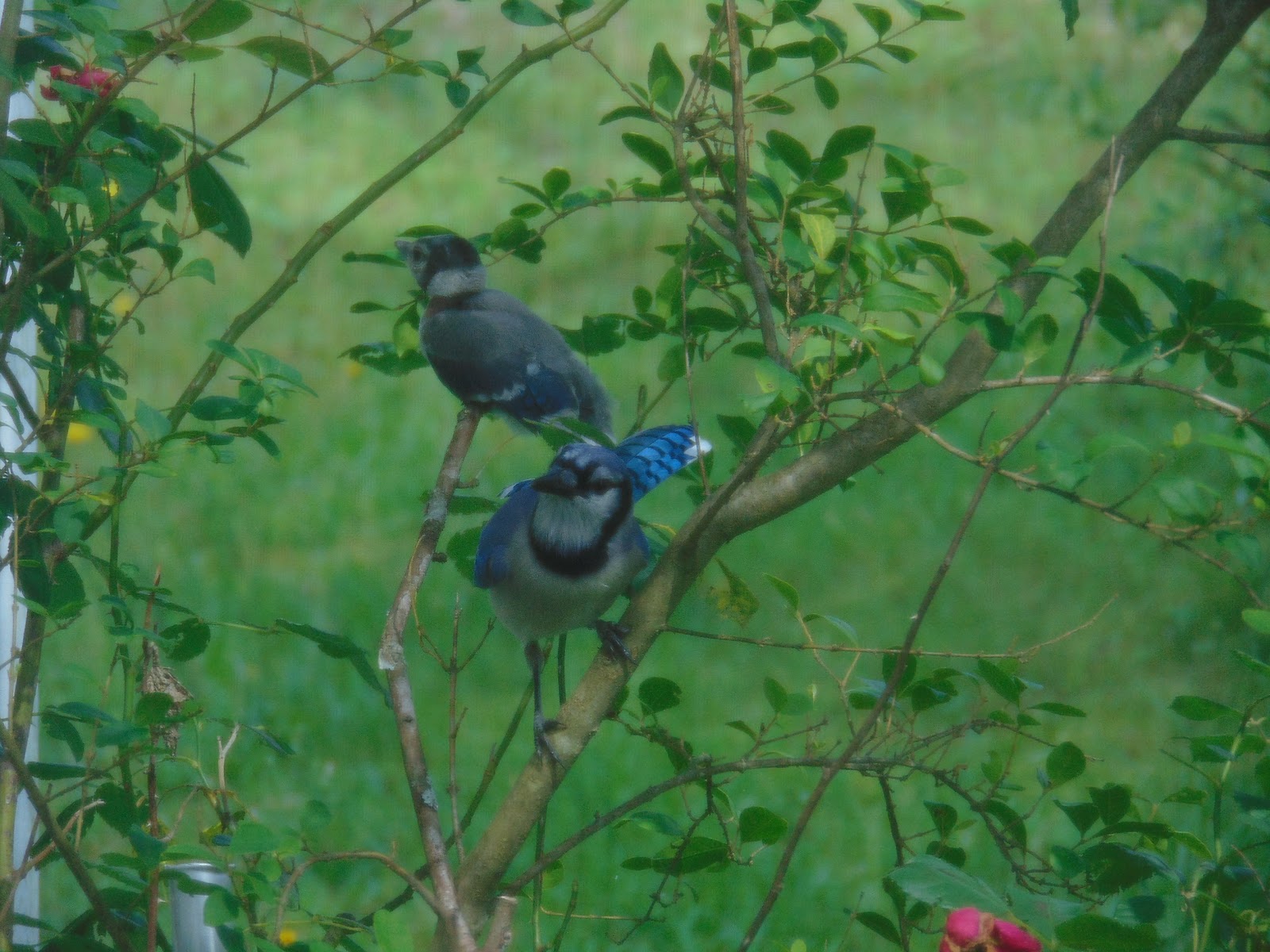
Coastal Blue Jay (Cyanocitta cristata cristata) mother and chick
hanging out in the rosebush outside my bedroom window.

Good morning, Y'all!

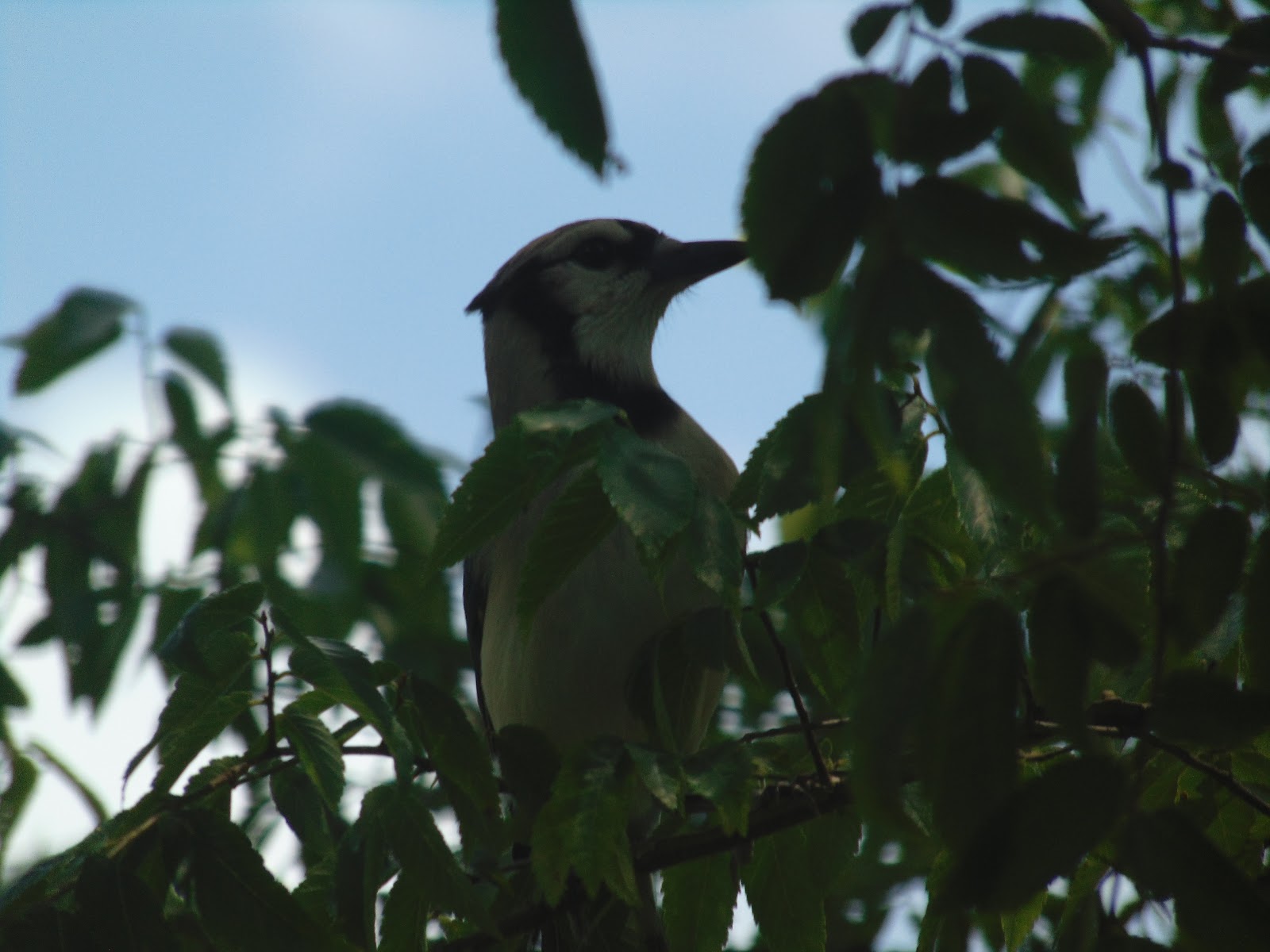
Yesterday, I was treated to a lovely sight in my front yard and bird feeder -- several beautiful Blue Jays making their late spring appearance, including a mother and chick in my rose bush.

The Blue Jay (Cyanocitta cristata) -- or Jaybird as they are sometimes called -- is a passerine bird in the family Corvidae, native to eastern North America. It resides through most of eastern and central United States. There are four distinct subspecies of this bird. Here in South Carolina we have the Coastal Blue Jay (Cyanocitta cristata cristata).  

Here are the shots that I was able to capture of these remarkably beautiful birds. 


Juvenile Blue Jay in my rosebush.

I hope y'all enjoyed my photos, please let me know in the comments section below.

Have a wonderful Dixie Day and y'all come back now, ya hear!