
Showing posts with label Star Wars. Show all posts
Showing posts with label Star Wars. Show all posts
Monday, May 04, 2026

Monday, February 16, 2026

Monday, December 09, 2024

Thursday, May 04, 2023

Wednesday, May 25, 2022
Happy 45th Anniversary Of Star Wars -- In Loving Memory

On Wednesday, May 25, 1977 -- 45 years ago today -- the film Star Wars (later renamed Star Wars Episode IV: A New Hope) directed by George Lucas premiered initially in less than 40 movie theaters across the country, and later became a global cinematic and popular culture phenomenon that inspired one of the greatest geek culture franchises in modern history.
From those Gen-Xers (late 70s and 80s kids) like myself who grew up knowing this franchise and were heavily inspired by it to those actors who are no longer with us, but continue to inspire many of us to pursue our dreams and stimulate our imaginations -- thank you for 45 years of memories!


Peter Cushing (1913 - 1994)
Alec Guinness (1914 - 2000)
Carrie Fisher (1956 - 2016)
Kenny Baker (1934 - 2016)
Peter Mayhew (1944 -2019)
David Prowse (1935 - 2020)
May The Force Be With You, Always!
Thursday, March 10, 2022
Was Undoing The Snap Actually A Good Thing?

Was Undoing The Snap Actually A Good Thing?
And Other Ethical Dilemmas In Popular Geek Culture
By C.W. Roden
One of my all-time favorite comedy movies is the 1994 Kevin Smith directed independent film Clerks.
One scene in particular that always puts a smile on my face is the infamous second Death Star destruction debate where Randal makes an argument with his co-worker Dante about the morality of destroying the second Death Star in Star Wars Episode VI: Return of the Jedi (1983).
His argument being that because it took the Galactic Empire less time to build the second Death Star they had to hire out independent contractors to help with the construction. Also because the second Death Star was still under construction those same independent contractors were likely still on board when the Rebel Alliance destroyed it. Basically that those alleged independent contractors -- people just trying to make a paycheck and provide for their families and took a government contract -- were killed and became collateral damage in a war they took no part in.
Randal also characterizes the Rebel Alliance as a bunch of "left-wing militants" which this blogger would strongly argue wasn't the case, but that's another argument for another time.
It's at this point in the film that someone in the store (who happens to be an independent contractor) overhearing the conversation points out to Dante and Randal that those independent contractors understood what they were getting into when they took the job, hence they took a side and were actively working with the Empire to construct their station/super-weapon and became legitimate targets for the subsequent military action taken by the Rebel Alliance.
This debate became so famous in fandom circles that even Star Wars creator George Lucas addressed it in the commentary for Star Wars Episode II: Attack of the Clones (2002) -- though in my opinion not in a satisfactory way.
Adding my own two cents I would point out that Randal was completely wrong about the first fully operational and completed Death Star being manned just by Imperials.
There were multiple detention centers on that Death Star similar to the one that Princess Leia was being held prisoner in, meaning there were likely dozens of military and civilian prisoners, all enemies of the Empire, who also died during that raid. Granted at least some of these hypothetical prisoners might have been legitimate criminals -- spice smugglers, slave dealers, space pirates, ect. -- rather than rebel "trouble-makers" but even they deserved to have legal due process rather than simply becoming collateral damage.
There are real-life historical precedents to this, such as the dozen U.S. military prisoners held by the Japanese military in Hiroshima who were killed in the August 6, 1945 atomic bombing of the city, along with tens of thousands of Japanese civilians and soldiers. The U.S. military knew that there were likely American and Allied prisoners there, but judged the demonstration of the bomb and its subsequent impact on the Japanese military warlords running the country justified their sacrifice.
Like the Japanese Empire and their war of aggression, the Galactic Empire had to be stopped from using their planet-killing weapon to further enslave the galaxy, and the Rebel Alliance did what they had to do, regardless of the collateral damage.
In short, they had to think of the greater good.
Ethical Dilemmas In Popular Culture & Their Real Life Parallels
Much like our two favorite Gen X slackers in Clerks, I've always enjoyed those sorts of moral debates when it comes to fictional characters and situations in cinematic popular culture and literature. At almost every fandom convention, pop culture website, or geek blog one can find endless debates on topics like these; and believe me between my own Gen X and the Millennial generation, we've come up some doozies over the years.
Yet some of these very questions posed over the actions of fictional characters actually have some significant and interesting real-life parallels.
Here are just a few examples:
Are all the Slytherins in the Harry Potter franchise actually evil people?
Certainly not all of them were like Draco Malfoy and his gang, several of whom were the children of the evil Lord Voldemort's followers, the Death Eaters. Mostly likely the rest of the students from Slytherin House just wanted to keep their heads down and stay neutral. Others were likely just loyal to their families and the people who loved them -- remember these are children and their parents who loved them and raised them, even if those same parents were prejudiced monsters who followed Voldemort and committed horrible terrorist acts in his name. Love for family can make you very short-sighted when it comes to their flaws at times. Some of them might not have even shared those prejudices at all. Indeed odds are good that not every single Slytherin student came from parents who were Death Eaters, or were even so-called "Purebloods" and many might not have had any connections to Voldemort's cause at all.
Also remember that the other three-quarters of the school were already against them, or viewed them with suspicion. If any of them were questioning the views of Draco Malfoy, and the Death Eaters children, then who could they have turned to? Harry Potter? We know how he felt about the Slytherins based on his experiences with Malfoy. Dumbledore? The guy who gave Gryffindor House the win at the end of book one by adding all those house points at the last minute? Since we don't really have any Slytherin student's points of view in the novels, we can never know.
In the end none of them were given any real chance to join the others in defending Hogwarts in the final battle, having been judged to be untrustworthy and simply dismissed; themselves the victims of prejudiced stereotyping of the very sort the "good guys" were supposedly fighting against. Did they deserve to all be labeled as threats?
For that matter how do we know for certain that Salizar Slytherin, the founder of the Hogwarts House, was motivated entirely on racial prejudice because of his preferences for all-magic families? Remember that the history of who Slytherin was was largely written by the people he found himself at odds with, hardly an unbiased source. When Hogwarts was founded it was during the European Middle Ages -- the "burning times" as some of my Wiccan friends would call them -- and Muggles (non-magic people) regarded wizards and witches as evil and dangerous. Could he have been concerned that some Muggleborn student would have sold them out, willingly or otherwise, and simply acted under a very real fear taken to extremes? The Hogwarts Sorting Hat did point out in book five (Harry Potter and the Order of the Phoenix) that both Slytherin and Godric Gryffindor had been best friends before -- unlikely partnership if one of them had been an evil dark wizard.
One scene in particular that always puts a smile on my face is the infamous second Death Star destruction debate where Randal makes an argument with his co-worker Dante about the morality of destroying the second Death Star in Star Wars Episode VI: Return of the Jedi (1983).
His argument being that because it took the Galactic Empire less time to build the second Death Star they had to hire out independent contractors to help with the construction. Also because the second Death Star was still under construction those same independent contractors were likely still on board when the Rebel Alliance destroyed it. Basically that those alleged independent contractors -- people just trying to make a paycheck and provide for their families and took a government contract -- were killed and became collateral damage in a war they took no part in.
Randal also characterizes the Rebel Alliance as a bunch of "left-wing militants" which this blogger would strongly argue wasn't the case, but that's another argument for another time.
It's at this point in the film that someone in the store (who happens to be an independent contractor) overhearing the conversation points out to Dante and Randal that those independent contractors understood what they were getting into when they took the job, hence they took a side and were actively working with the Empire to construct their station/super-weapon and became legitimate targets for the subsequent military action taken by the Rebel Alliance.
This debate became so famous in fandom circles that even Star Wars creator George Lucas addressed it in the commentary for Star Wars Episode II: Attack of the Clones (2002) -- though in my opinion not in a satisfactory way.
 |
| Another million Imperials (and possible independent contractors) killed -- complements of Lando Calrissian and Wedge Antilles. |
Adding my own two cents I would point out that Randal was completely wrong about the first fully operational and completed Death Star being manned just by Imperials.
There were multiple detention centers on that Death Star similar to the one that Princess Leia was being held prisoner in, meaning there were likely dozens of military and civilian prisoners, all enemies of the Empire, who also died during that raid. Granted at least some of these hypothetical prisoners might have been legitimate criminals -- spice smugglers, slave dealers, space pirates, ect. -- rather than rebel "trouble-makers" but even they deserved to have legal due process rather than simply becoming collateral damage.
There are real-life historical precedents to this, such as the dozen U.S. military prisoners held by the Japanese military in Hiroshima who were killed in the August 6, 1945 atomic bombing of the city, along with tens of thousands of Japanese civilians and soldiers. The U.S. military knew that there were likely American and Allied prisoners there, but judged the demonstration of the bomb and its subsequent impact on the Japanese military warlords running the country justified their sacrifice.
Like the Japanese Empire and their war of aggression, the Galactic Empire had to be stopped from using their planet-killing weapon to further enslave the galaxy, and the Rebel Alliance did what they had to do, regardless of the collateral damage.
In short, they had to think of the greater good.
Ethical Dilemmas In Popular Culture & Their Real Life Parallels
Much like our two favorite Gen X slackers in Clerks, I've always enjoyed those sorts of moral debates when it comes to fictional characters and situations in cinematic popular culture and literature. At almost every fandom convention, pop culture website, or geek blog one can find endless debates on topics like these; and believe me between my own Gen X and the Millennial generation, we've come up some doozies over the years.
Yet some of these very questions posed over the actions of fictional characters actually have some significant and interesting real-life parallels.
Here are just a few examples:
Are all the Slytherins in the Harry Potter franchise actually evil people?
Certainly not all of them were like Draco Malfoy and his gang, several of whom were the children of the evil Lord Voldemort's followers, the Death Eaters. Mostly likely the rest of the students from Slytherin House just wanted to keep their heads down and stay neutral. Others were likely just loyal to their families and the people who loved them -- remember these are children and their parents who loved them and raised them, even if those same parents were prejudiced monsters who followed Voldemort and committed horrible terrorist acts in his name. Love for family can make you very short-sighted when it comes to their flaws at times. Some of them might not have even shared those prejudices at all. Indeed odds are good that not every single Slytherin student came from parents who were Death Eaters, or were even so-called "Purebloods" and many might not have had any connections to Voldemort's cause at all.
Also remember that the other three-quarters of the school were already against them, or viewed them with suspicion. If any of them were questioning the views of Draco Malfoy, and the Death Eaters children, then who could they have turned to? Harry Potter? We know how he felt about the Slytherins based on his experiences with Malfoy. Dumbledore? The guy who gave Gryffindor House the win at the end of book one by adding all those house points at the last minute? Since we don't really have any Slytherin student's points of view in the novels, we can never know.
In the end none of them were given any real chance to join the others in defending Hogwarts in the final battle, having been judged to be untrustworthy and simply dismissed; themselves the victims of prejudiced stereotyping of the very sort the "good guys" were supposedly fighting against. Did they deserve to all be labeled as threats?
For that matter how do we know for certain that Salizar Slytherin, the founder of the Hogwarts House, was motivated entirely on racial prejudice because of his preferences for all-magic families? Remember that the history of who Slytherin was was largely written by the people he found himself at odds with, hardly an unbiased source. When Hogwarts was founded it was during the European Middle Ages -- the "burning times" as some of my Wiccan friends would call them -- and Muggles (non-magic people) regarded wizards and witches as evil and dangerous. Could he have been concerned that some Muggleborn student would have sold them out, willingly or otherwise, and simply acted under a very real fear taken to extremes? The Hogwarts Sorting Hat did point out in book five (Harry Potter and the Order of the Phoenix) that both Slytherin and Godric Gryffindor had been best friends before -- unlikely partnership if one of them had been an evil dark wizard.
Both of these pose good real-life questions over the idea of stereotyping people and revisionist history respectively.
Another example would be the question: Is Master Chief in the Halo game franchise really a hero, or a mass murdering planet killer?
I'm being serious, well at least as serious as this nerd culture talk can get. Sure Master Chief saved humanity from the Covenant and their plans to wipe it out life in the galaxy at the end of the first Halo game when he destroyed the massive ringworld superweapon.
However, as one can see in the game, the Halo had a living biosphere complete with biological life: plants and animals. The animals that existed on the land and water habitat on the ringworld had no say in the fact they were born on a massive superweapon. Certainly the life-killing super-weapon had to be stopped, but did the lifeforms inhabiting the ringworld deserve to be sacrificed on the alter of war? This is a deeply ethical question when it comes to war and those innocents caught in the crossfire of two competing enemies.
Obviously preventing the destruction of Earth -- and most intelligent life in much of the galaxy -- was a top priority for Master Chief and the humans. All the same could there have been another way of stopping the first Halo from being used by the Covenant that would have damaged the weapon, but spared the biosphere from being destroyed along with it?
In that case though none of the lifeforms on the Halo ringworld were shown to be sentient -- fully self-aware and possessing consciousness, even in an early evolutionary state. If they had, then the crime of causing their extinction through outside interference with their natural development becomes even more serious.
The real-life parallel here involves us Earthlings sending probes to Mars looking for signs of micro-biological life. If we actually find it beneath the surface, possibly in geothermal vents, or theorized underground water sources, the question arises: what then? Do we then continue to sent objects from Earth to Mars, which carry our own native bacterial life, and pollute another ecosystem? Does our own scientific curiosity as a species outweigh the ethical argument of interfering with lifeforms (even bacteria) alien to us?
If we were talking Star Trek here, the Prime Directive would certainly come into play surely.
Certainly in the world of comic books and graphic novels, the actions of superheroes have recently been brought into question. Are they really heroes, or just vigilantes who take the law into their own hands? I mean granted their actions stop even worse people from doing terrible things, but in doing so they violate international borders, fail to notify local authorities, and put populations of cities in danger while fighting their enemies.
There is a fine line, and its something that popular culture and social media has been recently addressing, again echoing real life events.
Over the last few years, these sorts of moral debates have made their way into popular superhero movies and literature, like the major debate by fans over Superman destroying half of Metropolis, and likely killing hundreds of people, to stop the tyrant General Zod from destroying the rest of the Earth in the DC Comics film Man of Steel (2013). This became such a serious debate that it was touched on as a major plot point in the film's sequel, Batman Vs. Superman: Dawn of Justice (2016).
Obviously Superman could not simply do nothing while Zod and his minions destroyed the Earth, and a fight between two men with equal strength and potentially deadly powers like lazer-beam eyes is going to result in some collateral damage. Given the alternatives, the civilian casualties, while certainly terrible, pale in comparison to a dead planet and the extinction of humanity itself. Though that would be small consolation to the families of the dead and permanently maimed.
Ironically, no similar debate initially took place a year earlier in Marvel's The Avengers (2012) when the Avengers fought the alien Chitauri forces commanded by Thor's demented brother, Loki; a battle that also took a number of civilian lives and left a large number of human casualties. Although later in Captain America: Civil War (2016) the issue of oversight comes into question as a major plot twist that divides the team.
The irony in that is that neither side in the debate over the Sokovia Accords is entirely wrong. Yes, people who have super human abilities do need to be reminded why they use their powers to fight, namely to protect the innocent from dangerous threats. Remember that with that power comes a sense of greater responsibility -- thank you for that bit of wisdom, Uncle Ben!
At the same time, are the Avengers, the X-Men, or The Fantastic Four supposed to just sit and wait on some U.N. committee to endlessly debate authorizing them to stop someone like Doctor Doom, Magneto, or Mister Sinister -- people who have similar powers while clearly showing no ethical restraint in how they utilize them -- from doing something terrible somewhere?
While were at it, just what about that civilian authority itself? The last time the Avengers put themselves under the command of an authority -- namely S.H.I.E.L.D. -- it turned out to be infiltrated and controlled by agents of the Nazi-like terror organization, Hydra. So obviously blind trust in any authority is also a no-no.
There have been serious debates over the morality of authority over superheroes in the X-Men comics, cartoons, and films. Is the proposed Mutant Registration Act in the first X-Men film really just about the U.S. government keeping track of people out of fear of their abilities; or are those a means of finding out who they are, what they can do, and a build-up to an inevitable rounding up and arrest of all said people with special abilities?
There are obvious real-life parallels to both of these examples when it comes to the debate on gun ownership rights, the 2nd Amendment, and so-called Red Flag laws to keep track of the "dangerous people" -- at least those deemed dangerous as defined by the standards of whomever the current political establishment is at any given time depending on election cycles.
Other parallels to real life within the X-Men story arcs concern discrimination based on racism and sexual orientation. It draws deliberate parallels between the oppression of mutants and that of other marginalized groups. These are well documented online on many fan sites and have been debated endlessly for nearly two decades now.
Now to your average normie the idea of a subculture of fanboys and fangirls endlessly discussing the ethics and morality of what happens to their favorite fictional characters and the worlds they inhabit might seem amusing, even childish. I mean who really cares who shot first: Han Solo, or Greedo? (Writer's note: It was Han dammit!) Some of these same people probably wouldn't admit that they themselves cried over a favorite character in a novel, or movie dying.
Another example would be the question: Is Master Chief in the Halo game franchise really a hero, or a mass murdering planet killer?
I'm being serious, well at least as serious as this nerd culture talk can get. Sure Master Chief saved humanity from the Covenant and their plans to wipe it out life in the galaxy at the end of the first Halo game when he destroyed the massive ringworld superweapon.
However, as one can see in the game, the Halo had a living biosphere complete with biological life: plants and animals. The animals that existed on the land and water habitat on the ringworld had no say in the fact they were born on a massive superweapon. Certainly the life-killing super-weapon had to be stopped, but did the lifeforms inhabiting the ringworld deserve to be sacrificed on the alter of war? This is a deeply ethical question when it comes to war and those innocents caught in the crossfire of two competing enemies.
Obviously preventing the destruction of Earth -- and most intelligent life in much of the galaxy -- was a top priority for Master Chief and the humans. All the same could there have been another way of stopping the first Halo from being used by the Covenant that would have damaged the weapon, but spared the biosphere from being destroyed along with it?
In that case though none of the lifeforms on the Halo ringworld were shown to be sentient -- fully self-aware and possessing consciousness, even in an early evolutionary state. If they had, then the crime of causing their extinction through outside interference with their natural development becomes even more serious.
The real-life parallel here involves us Earthlings sending probes to Mars looking for signs of micro-biological life. If we actually find it beneath the surface, possibly in geothermal vents, or theorized underground water sources, the question arises: what then? Do we then continue to sent objects from Earth to Mars, which carry our own native bacterial life, and pollute another ecosystem? Does our own scientific curiosity as a species outweigh the ethical argument of interfering with lifeforms (even bacteria) alien to us?
If we were talking Star Trek here, the Prime Directive would certainly come into play surely.
Certainly in the world of comic books and graphic novels, the actions of superheroes have recently been brought into question. Are they really heroes, or just vigilantes who take the law into their own hands? I mean granted their actions stop even worse people from doing terrible things, but in doing so they violate international borders, fail to notify local authorities, and put populations of cities in danger while fighting their enemies.
There is a fine line, and its something that popular culture and social media has been recently addressing, again echoing real life events.
Over the last few years, these sorts of moral debates have made their way into popular superhero movies and literature, like the major debate by fans over Superman destroying half of Metropolis, and likely killing hundreds of people, to stop the tyrant General Zod from destroying the rest of the Earth in the DC Comics film Man of Steel (2013). This became such a serious debate that it was touched on as a major plot point in the film's sequel, Batman Vs. Superman: Dawn of Justice (2016).
Obviously Superman could not simply do nothing while Zod and his minions destroyed the Earth, and a fight between two men with equal strength and potentially deadly powers like lazer-beam eyes is going to result in some collateral damage. Given the alternatives, the civilian casualties, while certainly terrible, pale in comparison to a dead planet and the extinction of humanity itself. Though that would be small consolation to the families of the dead and permanently maimed.
Ironically, no similar debate initially took place a year earlier in Marvel's The Avengers (2012) when the Avengers fought the alien Chitauri forces commanded by Thor's demented brother, Loki; a battle that also took a number of civilian lives and left a large number of human casualties. Although later in Captain America: Civil War (2016) the issue of oversight comes into question as a major plot twist that divides the team.
The irony in that is that neither side in the debate over the Sokovia Accords is entirely wrong. Yes, people who have super human abilities do need to be reminded why they use their powers to fight, namely to protect the innocent from dangerous threats. Remember that with that power comes a sense of greater responsibility -- thank you for that bit of wisdom, Uncle Ben!
At the same time, are the Avengers, the X-Men, or The Fantastic Four supposed to just sit and wait on some U.N. committee to endlessly debate authorizing them to stop someone like Doctor Doom, Magneto, or Mister Sinister -- people who have similar powers while clearly showing no ethical restraint in how they utilize them -- from doing something terrible somewhere?
While were at it, just what about that civilian authority itself? The last time the Avengers put themselves under the command of an authority -- namely S.H.I.E.L.D. -- it turned out to be infiltrated and controlled by agents of the Nazi-like terror organization, Hydra. So obviously blind trust in any authority is also a no-no.
There have been serious debates over the morality of authority over superheroes in the X-Men comics, cartoons, and films. Is the proposed Mutant Registration Act in the first X-Men film really just about the U.S. government keeping track of people out of fear of their abilities; or are those a means of finding out who they are, what they can do, and a build-up to an inevitable rounding up and arrest of all said people with special abilities?
There are obvious real-life parallels to both of these examples when it comes to the debate on gun ownership rights, the 2nd Amendment, and so-called Red Flag laws to keep track of the "dangerous people" -- at least those deemed dangerous as defined by the standards of whomever the current political establishment is at any given time depending on election cycles.
Other parallels to real life within the X-Men story arcs concern discrimination based on racism and sexual orientation. It draws deliberate parallels between the oppression of mutants and that of other marginalized groups. These are well documented online on many fan sites and have been debated endlessly for nearly two decades now.
Now to your average normie the idea of a subculture of fanboys and fangirls endlessly discussing the ethics and morality of what happens to their favorite fictional characters and the worlds they inhabit might seem amusing, even childish. I mean who really cares who shot first: Han Solo, or Greedo? (Writer's note: It was Han dammit!) Some of these same people probably wouldn't admit that they themselves cried over a favorite character in a novel, or movie dying.
All the same, one cannot deny that the real-life parallels these stories mirror evoke very strong feelings.
That brings me to the subject of this article that I would like to address: Was undoing the Snap actually a good thing? I'm going to pull a Randal here and offer y'all my own observations on the topic.
The Causes & Effect Of The Snap
With the release of Marvel's Avengers: Endgame (2019) your favorite blogger had the chance recently to re-watch this cinematic masterpiece all over again after having watched it on the big screen twice before the current pandemic made movie theaters passe.
The Causes & Effect Of The Snap
With the release of Marvel's Avengers: Endgame (2019) your favorite blogger had the chance recently to re-watch this cinematic masterpiece all over again after having watched it on the big screen twice before the current pandemic made movie theaters passe.
The movie takes place in the immediate aftermath of the events of the previous Marvel film, Avengers: Infinity War (2018), where the genocidal Titan, Thanos, used the power of the Infinity Gauntlet containing the six powerful infinity stones
to literally snap half of all the life in the universe out of existence
-- including a large number of our heroes and their families.
Worse, according to Marvel Cinematic Universe Wiki, Thanos did far more than just take out half of the universe's population. According to the site there were at least 3,797,000,000 humans confirmed deceased or missing worldwide. Both sentient and insentient beings perished in the Snap, including the bacteria in the bodies of the Snap survivors. The effects were similar across inhabited worlds throughout the universe, and even in the Multiverse and places such as the Quantum Realm.
In the MCU, Thanos was insane and thought that his cold decimation of half the life in the universe would bring about a reversal of the damage overpopulation caused on his own ravaged world. This is what makes Thanos such a compelling villain. Like all the best bad guys, Thanos believes himself to actually be the hero; and that his actions, no matter how insane they actually are, are justified for the greater good.
Actual real-life science however tells a whole different story.
Worse, according to Marvel Cinematic Universe Wiki, Thanos did far more than just take out half of the universe's population. According to the site there were at least 3,797,000,000 humans confirmed deceased or missing worldwide. Both sentient and insentient beings perished in the Snap, including the bacteria in the bodies of the Snap survivors. The effects were similar across inhabited worlds throughout the universe, and even in the Multiverse and places such as the Quantum Realm.
In the MCU, Thanos was insane and thought that his cold decimation of half the life in the universe would bring about a reversal of the damage overpopulation caused on his own ravaged world. This is what makes Thanos such a compelling villain. Like all the best bad guys, Thanos believes himself to actually be the hero; and that his actions, no matter how insane they actually are, are justified for the greater good.
Actual real-life science however tells a whole different story.
According to the article, if Thanos snapped away half of Earth's 7.6 billion people, we'd be left with 3.8 billion people, which brings us roughly back to 1970, in terms of population. But add to that the loss of the animals and plant life, the effects would be pretty catastrophic, perhaps even as bad as an extinction level event where a comet or asteroid strikes the Earth.
With half of the humans and animals gone on Earth, there would be major changes in the food chain. While humans would get the population back to normal in a few decades, the food chain and ecosystem could be heavily effected for animals who don't reproduce quickly, particularly those who were already endangered species.
This would have a major impact on humanity itself. For example imagine what the loss of half the world's honeybees and other pollinators would have a very serious impact on human food sources. We would see fresh water and other sources of food corrupted without some species of fish and bacteria. Some of the most endangered species on Earth would likely die out within a couple of years. With the ecosystem under such strain, life would change quite a lot for humanity.
Now having looked at the long-term consequences, let's look at the immediate aftermath of the Snap and the very human cost of Thanos' grand design.
As we watched in Avengers: Infinity War, there were people driving cars, flying planes, and doing other activities when the Snap occurred. We witness a helicopter crash into a building, both of which probably still had people in them who were suddenly killed. Same with people in cars where the driver suddenly turns into dust. The people in the cars who didn't disappear would suddenly find themselves in millions of automobile accidents, some of which would likely to be fatal ones.
Now just imagine this one. There are tens of thousands of airplanes in the sky, worldwide at any given time. Now imagine if each of those planes has around a few to a couple hundred people on them and a pilot suddenly disappears, that's nearly a million more deaths when the planes crash.
It would be the Biblical Rapture for all intents and purposes, and that leads to another problem: the reactions of the survivors themselves.
The loss of their loved ones would certainly drive some people insane with grief and survivor guilt. Children would be orphaned, parents would lose children and spouses, brothers and sisters. Anyone who has ever dealt with the loss of a loved one would understand how terrible the grief is. Imagine losing half of your loved ones, if not all of them at once. Some more deeply religious people might even become unhinged with zealotry and turn into people they otherwise would never have become before. Many others would take their lives to be with their lost loved ones.
Not just on Earth, but this scenario would be playing out on planet after planet across the universe and the multiverse itself.
Undoing The Snap
Now that I've laid out the major details -- and I'm sure I missed a few others, but bare with me here folks -- this is the world that we are introduced to at the beginning of Endgame with the story doing a time jump of five years after the Snap itself -- now referred to in the Marvel Cinematic Universe as "The Blip".
Our remaining heroes are still dealing with the aftermath of the Snap and believing they have failed in their mission to stop Thanos, who destroyed the Infinity Stones to prevent his actions from being reversed. Some continue to help pick up the pieces on Earth and across the galaxy at large, others have retired and moved on in one form or another, and one -- Clint "Hawkeye" Barton -- has become a vigilante after the dusting of his entire family.
Of course, with the return of Ant-Man from the Quantum Realm, where he'd been trapped for five years (or only a couple hours from his perspective) our heroes now have a means to retrieve the lost Infinity Stones and undo the losses caused by Thanos.
Now, obviously by now everyone has seen what happened, so I don't think I need to offer a spoiler alert for this: everyone who was dusted was brought back, all the superheroes that were lost return and join up with the survivors to lay the biggest smackdown in cinematic history on Thanos and his minions (actually, our heroes barely managed to stop him from doing far worse to reality).
All the same in the end evil is punished, slightly bittersweet happy ending with the selfless sacrifice of Tony Stark and an aged Steve Rogers passing the Captain America shield to Sam Wilson, and so now everyone is back and everything can go back to normal, right?
Nope. Wrong. Nada. Tort. Nein. Nyet. Chigau. Chowu de.
No doubt, like everyone else who saw Avengers: Endgame in the packed theaters back in the days just before the world was quarantined by the Covid-19 virus, the moment Hulk snapped, you were sitting there hoping that it worked. Like me, you probably felt that rush of relief when Hawkeye got the phone call from his vanished wife. And probably geeked out when all of the Avengers and characters of the MCU who were dusted reappear. It wasn't a happy moment, but also a totally epic moment seeing all of them gathered to finally put an end to the mad Titan and his minions.
That first time around, you really didn't have time to think about the other, long-ranging consequences of the reverse snap.
And it must be really crazy when you think about it ...3.5 billion people on Earth who were gone suddenly reappearing in the places where they disappeared five years later.
This conversation was always abstract and somewhat irrelevant before, but now not so much thanks to the continuing MCU films like Spider-Man:Far From Home (2019) and the Disney+ Marvel mini-series stories.
But while Far From Home showed the jokey side of the reverse Snap, WandaVision meanwhile showed us the psychological horror side of the reverse Snap.
In WandaVision, we found out that Maria Rambeau died of cancer after watching her only child, Monica Rambeau, turn to dust in her bedside chair and her daughter learning that terrible truth after coming back with no idea of time passing at all. Monica has to learn that, not only did her mother die from cancer that came back after receiving prior news that the surgery was successful, but that she and others disappeared and lost five years of time.
This scene showed the anxiety and panic of what the blink would be like for the vanished. Imagine yourself somewhere and, all of a sudden, with absolutely no realization that any time had passed; everything around you is abruptly different. In one instant you can't find your loved ones, or understand what's happening, only that everyone around you is just as lost and panicked as you are.
Could you imagine the utter chaos? The families that were broken apart, friends, businesses, governments even. Suddenly finding out your loved ones have got on with their lives after you disappeared. Re-married, had kids etc. Imagine coming back to not recognizing your own children as they were babies when the first snap happened. Running to what once was your home to find strangers living there, or worse, your partner with their new family. Or perhaps some family member driven to religious zealotry over your loss and then thinking you were not you when you returned?
And those would perhaps be the lucky ones.
Imagine finding out that the plane you were in crashed and you reappear okay, but that the family you were with died in a crash when the pilot of that plane also vanished. So, yeah people riding on planes, people riding subway, people driving cars on the highway, sailors on submarines or on ships in the middle of the ocean. There's a lot of potential horror stories that could happen on the reverse snap.
What about the consequences to the rest of the world at large? The whole economy and infrastructure is going down after you barely building it up to normal for half the population in five years, and suddenly the population returns to the pre-Snap level. What about the world leaders and monarchs that disappeared and then returned to find out they no longer hold office?
Some of the potential disruption and the consequences are addressed in the series The Falcon and the Winter Soldier where the new Captain America, Sam Wilson, and the former brainwashed assassin, Bucky Barnes, must deal with the threat of the antifa-type terrorist Flag Smashers group that seeks to establish their own new world order based on the post-Snap/pre-Blip world.
Not to mention the ecological issues. The newly extinct endangered animals getting half their population back, only to go extinct again potentially. The complete damage to the food chain with a sudden doubling of the animal population that likely began to slightly rebound before.
Crazy right?
So yes, Thanos is defeated -- though he probably wouldn't have needed to be if the Avengers didn't mess around with time and draw his attention again -- and all our heroes were brought back. Yet in doing so, they end up doing just as much damage as Thanos initially did, only in a different way.
Conclusion
Am I saying that it would have been better to leave those people gone? That would not be for me to say, I'm no philosopher. What I'm saying is that sometimes the cure can be as bittersweet, even as deadly, as the sickness itself.
Like all of the Avenger's actions, there are consequences that hold equally important ramifications. Save the world, but still people die. Stop universal Armageddon, but in doing so they created just as much disruption as those they were protecting the universe from. The real question should be: in the long-run was doing it worth it for the greater good?
Many like Clint Barton would say yes, while other potential Baron Helmut Zemo created from the end results might argue otherwise.
This is the definition of good storytelling though. You can feel glad that the good guys won, yet also feel that punch in your stomach over what cost they paid for that hard-won victory.
It also gives people like Dante and Randal something to bitch about between dealing with customers and putting up with Jay and Silent Bob's pot-dealing antics.
For the rest of us fandom fanatics, it gives us some serious food for thought.
 |
| This article is dedicated to the memory of Mr. Chadwick Aaron Boseman (1976 - 2020). Thank you for your dedication in bringing to life Marvel's Black Panther to the big screen. RIP Chad....and let Stan know we still miss him too. (Image courtesy of facebook) |
Tuesday, May 04, 2021

Monday, May 04, 2020
May The 4th Be With You & The State Of Star Wars

Well folks, last December I went to the theater and saw Star Wars Episode IX: The Rise Of Skywalker.
Yeah, that happened.
I mean what else can I say about it after the trailer and my complete lack of enthusiasm for seeing the next installment of Disney's woke space tragedy starring Mary Sue, uh I mean Rey, and a bunch of other diversity hire characters that I really didn't have any serious interest in at this point.
Oh don't get me wrong, as much as I dislike what Disney has done to the franchise I still planned to go see the film when it arrived to the theaters. I just was not looking forward to it with any great interest. After the travesties that were Star Wars Episode VIII: The Last Jedi and Solo: A Star Wars Story, by this point it almost felt like I did going through the motions of watching The Simpsons after season 10, simply because it was there.
The only thing that would have driven me to actually go shill out the money for a ticket to see the movie (which thanks to a co-worker's busy schedule I didn't actually have to do!) is seeing the conclusion of the Skywalker Saga that has been a part of my life-long fan obsession for as long as I could remember.
I won't mention spoilers here, even though by this time everyone knows what happened. My brain is still processing the fact that the glorified fanfiction I saw on the big screen was the actual conclusion of, not only to Disney's sequel trilogy, but of a journey that began in May of 1977.
To quote Darth Vader rising from the table at the end of Star Wars Episode III: Revenge Of The Sith: Noooooooo!
Now look, before y'all go on thinking oh this guy is one of those bitter fanboys who hates having a waaamen as a main character, let give you some background on how much Star Wars means to me as a fan.
Yeah, that happened.
I mean what else can I say about it after the trailer and my complete lack of enthusiasm for seeing the next installment of Disney's woke space tragedy starring Mary Sue, uh I mean Rey, and a bunch of other diversity hire characters that I really didn't have any serious interest in at this point.
Oh don't get me wrong, as much as I dislike what Disney has done to the franchise I still planned to go see the film when it arrived to the theaters. I just was not looking forward to it with any great interest. After the travesties that were Star Wars Episode VIII: The Last Jedi and Solo: A Star Wars Story, by this point it almost felt like I did going through the motions of watching The Simpsons after season 10, simply because it was there.
The only thing that would have driven me to actually go shill out the money for a ticket to see the movie (which thanks to a co-worker's busy schedule I didn't actually have to do!) is seeing the conclusion of the Skywalker Saga that has been a part of my life-long fan obsession for as long as I could remember.
I won't mention spoilers here, even though by this time everyone knows what happened. My brain is still processing the fact that the glorified fanfiction I saw on the big screen was the actual conclusion of, not only to Disney's sequel trilogy, but of a journey that began in May of 1977.
To quote Darth Vader rising from the table at the end of Star Wars Episode III: Revenge Of The Sith: Noooooooo!
Now look, before y'all go on thinking oh this guy is one of those bitter fanboys who hates having a waaamen as a main character, let give you some background on how much Star Wars means to me as a fan.
For over 40 years the Star Wars franchise was space opera and sci-fi adventure at some of its best....before the dark times, before The Mouse.
There has not been a moment in my life where I did not know the name Star Wars. I was born in June of 1976, about 11 months prior to the original Star Wars film being released on Wednesday, May 25, 1977.
As a young Southern boy, I loved watching the original Star Wars Episode IV: A New Hope with my family and all three of the original trilogy films in the early to mid-80s. I grew up throughout the 80s soaking up every bit of Star Wars that I could find, from pop-culture references of it on Jim Henson's Muppet Babies to the appearances of the cast on reruns of The Muppet Show. I even watched those gawdawful Ewoks and Star Wars: Droids – The Adventures of R2-D2 and C-3PO Saturday morning cartoon series in the mid-1980s.
I think I might have even watched the Star Wars Holiday Special once as a kid -- after which my brain probably completely repressed the memory to protect itself from that particular travesty.
I was completely hooked on the story of space wizards with glowing lightsabers battling evil in a sci-fi setting. I owned and read Shadows of the Empire, the three-part Heir of the Empire Thrawn trilogy, and a number of the older Expanded Universe (now Legends) stories.
When the remastered trilogy movies made their way to the theaters in 1997, I went and saw each of them on the big screen (I didn't actually get the see any of the original trilogy in the theaters and only saw them on VHS, or movie channels like Showtime). I did like most of the George Lucas' revisions, uh kind-of, even if I believed most of them were unnecessary -- and I still say Han Shot First dammit!
Then about twenty years ago back in May was the anniversary of the continuing saga of Star Wars with the release of Star Wars Episode I: The Phantom Menace prequel movie....which I actually enjoyed.
Yeah I know this will put me at odds with a number of fans, but I was never one to knock the prequel films, or crap on them for not being the original trilogy. They were never supposed to be the original trilogy. Do I think they were perfect films? No. Do I think they were better than the original trilogy? Hell no! But they did bring their own unique additions to the cannon lore of the Star Wars franchise and tie together with the original trilogy very well.
Plus they had some of the most kick-ass lightsaber duels of the entire saga to date. There are very few fans today who won't admit to having John Williams brilliantly composed theme Duel of the Fates playing in their brains whenever they see an awesome sword fight, or swing their own plastic lightsabers.
Granted fans expected more than Jar-Jar Binks and Podracing back in 1999 and maybe fan expectations were raised a bit too high after the outstanding expanded universe created over the two decades between Return of the Jedi and The Phantom Menace by a fandom that was starving for new Star Wars content. Still, if one does not try to compare the prequel trilogy with the original trilogy too rigidly, as I choose not to, then a fan can still find stories that fit both trilogies together nicely. I got through them and even enjoyed them because I accepted them for what they were -- a three-part origin story for the trilogy that I grew up with in my formative years.
All the same after another two decades most fans can look back and see Lucas' guiding hand and respect for the original story in the prequel films -- especially compared to what has come out of now Disney owned Lucasfilm over the last few years. Even the Star Wars The Clone Wars animated film and subsequent Cartoon Network television series is seen today by most fans as a brilliant addition to the franchise.
Now I know I have been hard on Disney and the corporate shills at Lucasfilm, but I am nerd enough to admit that they haven't completely destroyed Star Wars -- well not just yet.
Yes many agree that they have devalued Star Wars considerably, but in the hands of people who respect the original vision they can still produce some good content. Rogue One: A Star Wars Story and Star Wars Rebels Disney Channel series were both well done in relation to staying true to Lucas' vision. Not without their flaws, to be certain, but still seen by many fans as good storytelling. Certainly The Mandalorian series is widely panned by the Star Wars fandom as well made, and the final season of Star Wars The Clone Wars was probably more anticipated than The Rise of Skywalker ever was -- thank you Dave Feloni!
Unlike many old time fans, I do not see the original trilogy films and Star Wars specials through rose-colored nostalgia glasses. They certainly had their flaws also, and I have never been one of those George Lucas Is God And Can Do No Wrong fanatical fans (and yes even now some of them still exist). Nor am I necessarily one of those fans that thinks that Star Wars peaked with Empire Strikes Back -- even if I do agree it was likely the best of the films so far.
However, when it comes to making serious feature films and putting them in the hands of directors pushing identity politics and personal agendas ahead of the original vision for Star Wars and the formula that made it work, I think a vast majority can agree that Disney/Lucasfilm sucks for the most part at storytelling -- Rogue One notwithstanding, which actually was a good if not completely flawless film itself.
My final verdict based on what I have seen is that Star Wars is not entirely dead, just frozen in carbonite and hanging on the wall of Disney The Hutt's palace waiting for someone -- anyone -- to sneak in and thaw it out.
Have a wonderful Dixie Day, and May the 4th be with y'all, always!
Thursday, June 20, 2019
Top Ten Star Wars Quotes That Describe My Sex Life

Truthfully I can describe my sex life using ten Star Wars quotes, and here they are:
(10) "I've got a bad feeling about this."
(9) "Negative, it didn't go in. Just impacted on the surface."
(8) "Stay on target....stay on target...."
(7) "Look at the size of that thing!" (That's what she said.)
(6) "She may not look like much, but she's got it where it counts."
(5) "What an incredible smell you discovered."
(4) "That's a name I haven't heard in a long time."
(3) "Sorry about the mess."
(2) "You don't have to do this to impress me."
(1) "You came in that thing? You're braver than I thought."
Close runners up:
"Now let's blow this thing and go home."
"I thought they smelled back on the outside."
 |
| "Pull out, you're not doing any good back there!" Yeah, sadly I've heard that one before too. (sighs) |
Thursday, May 25, 2017
Celebrating 40 Years Of Star Wars
A long time ago, in a galaxy far, far away....


On Wednesday, May 25, 1977, the world was changed forever by a film that few people -- including those who helped produce it and the actors who played in it -- thought would be successful.
Star Wars (later renamed Star Wars Episode IV: A New Hope) premiered in less than 40 theaters across the United States and overnight became one of the most highly successful science fiction films of all time and a worldwide cultural icon.
It came at a time when this country was going through a massive political and social upheaval following the end of the Vietnam War (1964 - 1975) and the Watergate scandal. When the American public was uncertain about the future and pessimistic at best about it's present.
George Lucas' epic saga of a galactic civil war pitting a vastly outnumbered and outgunned Rebel Alliance against the seemingly overwhelming forces of an evil Galactic Empire, with memorable arch-typical characters, outstanding special effects (for that time), and equally outstanding musical score; brought America out of its collective depression and gave us hope for a better tomorrow.
That and it was just a damn good movie with memorable moments that reached out from the silver screen and touched on some deeper yearning in all our hearts.
Perhaps the most iconic image of the film is the scene where Luke Skywalker is standing by the homestead on the desert planet of Tatooine watching the binary sunset and dreaming of being more than just a moisture farmer on a planet in the outer rim of the galaxy. Certainly all of us have felt that same feeling of melancholy as Luke? Looking out beyond our current place in life, dreaming to find adventure, or perhaps just something a bit more than what we had?
Since that time, Star Wars has inspired seven feature films -- with the 8th coming out this December -- and several outstanding animated TV series spinoffs.* It inspired fans of the first trilogy of the franchise to build an outstanding expanded universe (now Legends), as well as brought inspiration of thousands of current well-know (and many unknown) science fiction writers, directors, film makers, and scriptwriters to build on the foundation lain down by George Lucas.
Being born in June 1976 and only 11 months old when Star Wars came to the theaters for the first time, this movie and the amazing franchise built around it by its legions of fans, has been a constant companion in my life -- one that likely jump-started my love for science fiction and fantasy adventure stories. For that I will always hold Mr. Lucas, the genius who inspired and created that incredible universe, in the highest regard.
I know that I am not the only one from my generation who feels the same way. In closing I would like to say thank you to all those who made this franchise successful.
May The Force Be With Y'all, Always!
* I would like to make it clear for the record that I do not -- in any way, shape, or form -- include that horrible Christmas Special in that group of memorable Star Wars TV shows. I still have nightmares about my first and only viewing of that horrendous show in my youth. The less said about it, the better!
It came at a time when this country was going through a massive political and social upheaval following the end of the Vietnam War (1964 - 1975) and the Watergate scandal. When the American public was uncertain about the future and pessimistic at best about it's present.
George Lucas' epic saga of a galactic civil war pitting a vastly outnumbered and outgunned Rebel Alliance against the seemingly overwhelming forces of an evil Galactic Empire, with memorable arch-typical characters, outstanding special effects (for that time), and equally outstanding musical score; brought America out of its collective depression and gave us hope for a better tomorrow.
That and it was just a damn good movie with memorable moments that reached out from the silver screen and touched on some deeper yearning in all our hearts.
Perhaps the most iconic image of the film is the scene where Luke Skywalker is standing by the homestead on the desert planet of Tatooine watching the binary sunset and dreaming of being more than just a moisture farmer on a planet in the outer rim of the galaxy. Certainly all of us have felt that same feeling of melancholy as Luke? Looking out beyond our current place in life, dreaming to find adventure, or perhaps just something a bit more than what we had?
Since that time, Star Wars has inspired seven feature films -- with the 8th coming out this December -- and several outstanding animated TV series spinoffs.* It inspired fans of the first trilogy of the franchise to build an outstanding expanded universe (now Legends), as well as brought inspiration of thousands of current well-know (and many unknown) science fiction writers, directors, film makers, and scriptwriters to build on the foundation lain down by George Lucas.
Being born in June 1976 and only 11 months old when Star Wars came to the theaters for the first time, this movie and the amazing franchise built around it by its legions of fans, has been a constant companion in my life -- one that likely jump-started my love for science fiction and fantasy adventure stories. For that I will always hold Mr. Lucas, the genius who inspired and created that incredible universe, in the highest regard.
I know that I am not the only one from my generation who feels the same way. In closing I would like to say thank you to all those who made this franchise successful.
May The Force Be With Y'all, Always!
 |
| May you find your inspiration and find the courage to follow your dreams, my friends. |
* I would like to make it clear for the record that I do not -- in any way, shape, or form -- include that horrible Christmas Special in that group of memorable Star Wars TV shows. I still have nightmares about my first and only viewing of that horrendous show in my youth. The less said about it, the better!
Sunday, March 26, 2017
Mad Monster Party In Rock Hill, SC

On Sunday, March 26th, for the second time in two weeks, I returned to the Baxter Hood Center in Rock Hill to attend a convention. This time it was to attend Mad Monster Party, a con dedicated to classic horror films, movie monsters, aliens, and the just plain bizarre.
My kind of crowd.
I was truly fortunate to arrive and meet several celebrities from classic films and television shows, as well as see some memorabilia that took me back to my childhood and my early pseudo-adulthood.
The following photos document my time at Mad Monster Party.
 |
| Bumblebee from the original Transformers TV series, one of my favorite classic 80s cartoon shows. |
 |
| "You got the touch. You got the pow-errrrrr! Yeah!" |
 |
| Ecto 1 classic design from the original 1984 Ghostbusters film and Saturday Morning cartoon series The Real Ghostbusters. |
 |
| Proton packs and other Ghost Busters equipment. |


 |
| Jawa cosplayer from the Star Wars films. |


 |
| A young Godzilla cosplayer ravages the Baxter Hood Center with his mother. |
 |
| Absolutely loved this young cosplayer portraying Dipper from Disney's Gravity Falls TV series. |
 |
| The man, the legend, the 16 time World Heavyweight Champion and one of my personal childhood favorite wrestling personalities the "Nature Boy" Ric Flair! WHOOOOO! |
 |
| Sadly I could not afford to get his autograph or a photo with him. I did however get to shake his hand and let him know I've appreciated his work as a wrestler since childhood. I'd watched him wrestle in the very first Starrcade in 1983 and been a life-long fan. He thanked me for that. The Nature Boy thanked ME! WHOOO! |


 |
| The Creature in the Hawaiian shirt and awesome kilt. |
 |
| Authentic Jason Vorhees hockey mask from the Friday the 13th films autographed by actor Kane Hodder who played the killer in most of the films. |
 |
| Replica Leatherface leather mask from the classic horror film Texas Chainsaw Massacre Part 2. |


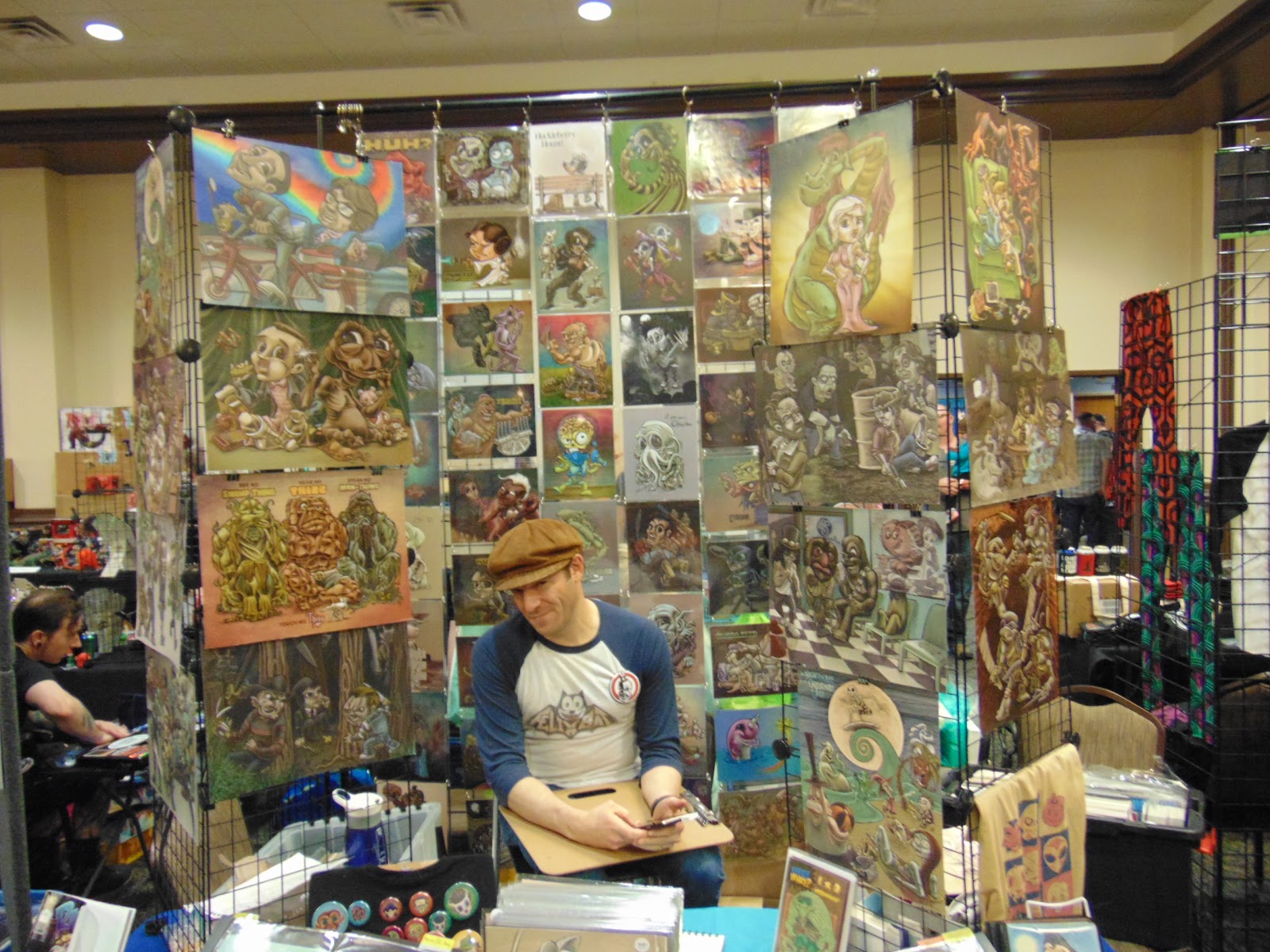


 |
| Teddy bears guaranteed to give a kid nightmares. |
 |
| One of this blogger's favorite 80s horror films, Critters (1986)! |


 |
| Namco. Atari. (sighs) Nostalgic magnets for 80's children like myself who remembers all these classic arcade games quite fondly. |


 |
| Rebel Alliance pilot cosplayer from the Star Wars films. |
 |
| One of my favorite cult classic horror films, the Night of the Living Dead (1968), with movie siblings Miss. Judith O'Dea (Barbara) and Mr. Russell Streiner (Johnny). |
 |
| "They're coming to get you, Barbara." |
 |
| "Stop it! You're acting like a child!" |
 |
| This was one of the people I really wanted to get an autograph from. The living legend Mr. Ricou Browning, who did the underwater stunt-work for the Gill-man -- one of the original classic Universal Monsters -- in all three of the Creature From The Black Lagoon films. It was a great honor to meet him and get a signed photograph. |
 |
| Mr. Billy Dee Williams, who portrayed Lando Calrissian in the Star Wars films: Episode V The Empire Strikes Back & Episode VI Return of the Jedi. |
 |
| Japanese stuntman Mr. Tsutomu Kitagawa, who played Godzilla in the Millennium ("Shinsei") series (1999 - 2004) of films, as well as King Ghidorah the Three-Headed Monster. |
 |
| Yours truly posing for a photo with Mr. Kitagawa-san. |
 |
| Mr. Kitagawa-san posing with the young Godzilla from earlier. |
Overall it was an outstanding time, full of movie and childhood nostalgia. I only wished I had more money to spend in order to get more signed photos and memorabilia. (Sighs) Oh well, spending time in the company of fellow fans of classic horror and monster films was fun. I hope to do it again sometime in the near future.
Once again, I hope y'all enjoyed my photos, and as always, y'all have a Dixie Day!
Subscribe to:
Posts (Atom)