Sunday, June 17, 2018

Visiting HeroesCon 2018


On Saturday, June 16th, my travels once again took me north to Charlotte, North Carolina to attend HeroesCon 2018 at the Charlotte Convention Center. 

As I have mentioned before in previous blog posts detailing my visits to this event, HeroesCon is an annual event that draws tens of thousands of fans and professional cosplayers from across the Carolinas to Charlotte every June. 

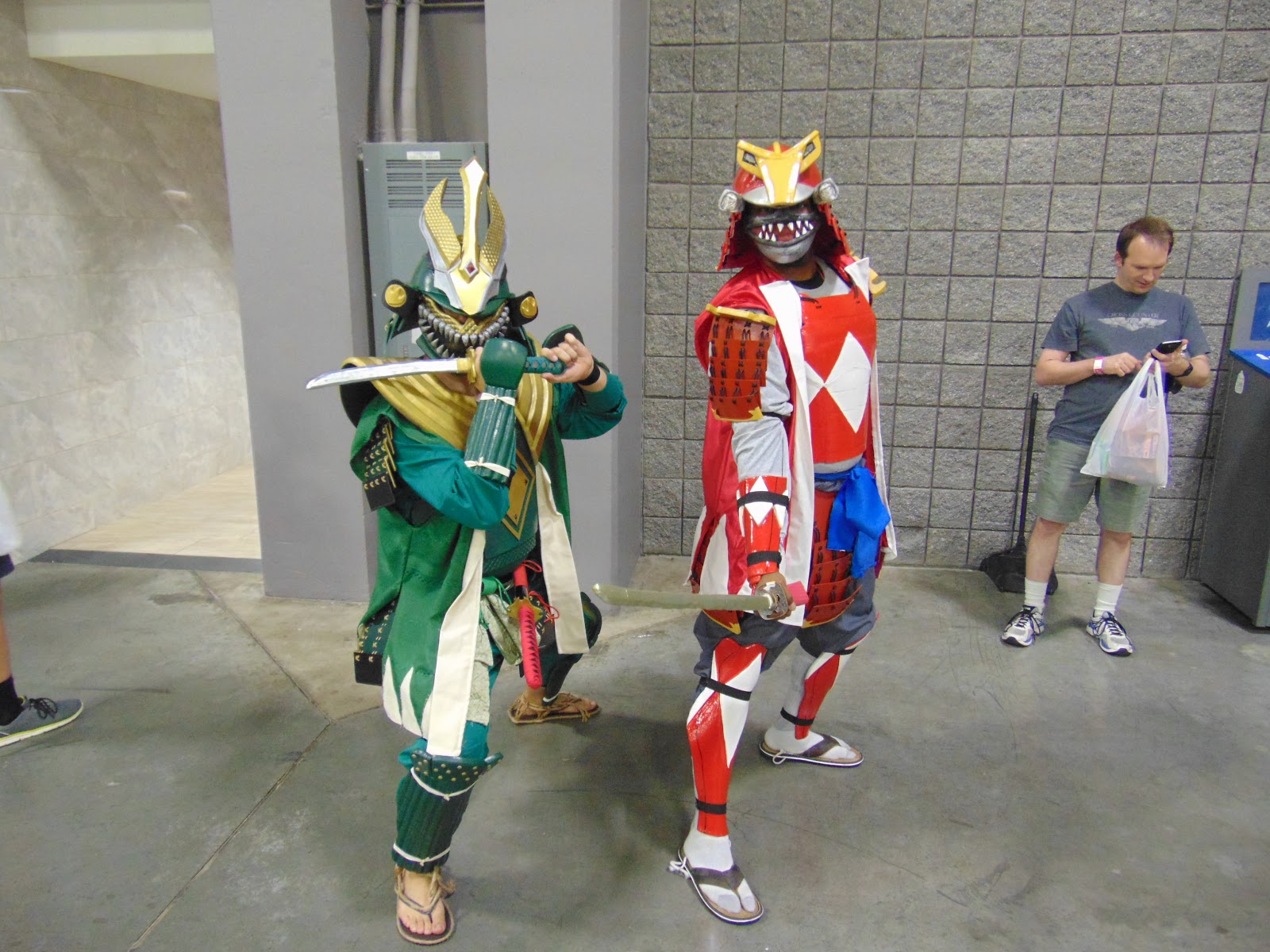
You can find just about everything at HeroesCon from superheroes and furries, to steampunk and fantasy artwork. Star Wars and cartoon characters, Marvel, DC and comic artwork of all types can be found here. 

This was my fourth official annual visit to this event since 2015, and I once again took my camera and captured some of my favorite moments and cosplayers. I hope y'all enjoy the photos. 


Yours truly standing in front of the DeLorean Time Machine
from Back To The Future sporting my Svengoolie glow-in-the-
dark t-shirt and Ulster Tartan kilt.
Animator Bob Camp, co-creator of The Ren & Stimpy Show.
I really enjoyed listening to him tell stories about the artwork
and the show.


Well folks, that was my trip to HeroesCon 2018. Once again I enjoyed spending time with fellow fans and all the outstanding cosplayers. It's always a great time at these events.

Hope y'all enjoyed the photos, and as always y'all have a wonderful Dixie day. 

Sunday, June 10, 2018

Night Sky Photography -- 07-10-2018 -- Jupiter & The Galilean Moons

Greetings Y'all!

Tonight this blogger managed to once again get a great evening shot of the giant planet Jupiter and its four largest moons: Io, Ganymede, Europa, and Callisto visible in the southern sky. 

The first shot I took of Jupiter near the branches of a tree in order to provide scale. Jupiter appears as a very bright star. The second photo I took a maximum zoom on my 35X Optical Zoom lens, and captured the Jovian Moons. 


I hope y'all enjoyed these outstanding photos. Have a good night and remember to keep looking to the night skies y'all!

Friday, June 01, 2018

Union Associated Reformed Presbyterian Church Confederate Monument

On SC Highway 9 in Richburg, South Carolina in Chester County sits a plain but beautiful Confederate Soldiers' Monument in front of the Union Associated Reformed Presbyterian Church right by the church cemetery where dozens of former Confederate soldiers are buried.

Originally called the Rocky Creek Meeting House founded in the early 1770’s as a part of the Reformed Denomination, the congregation of Union ARP Church was organized around 1795. The current sanctuary, the second on the site, was constructed in 1848. It was moved a short distance and remodeled in 1913. 

The monument, erected on May 7, 1939 by the United Daughters of the Confederacy, lists the names of all the veterans buried in the church cemetery.


Church, monument, and cemetery as seen from across
SC Highway 9.

Monday, May 28, 2018

The Blue And The Gray

The Blue And The Gray
  
Francis Miles Finch (1827-1907)


By the flow of the inland river,
Whence the fleets of iron have fled,
Where the blades of the grave-grass quiver,
Asleep are the ranks of the dead:
Under the sod and the dew,
Waiting the judgment-day;
Under the one, the Blue,
Under the other, the Gray.


These in the robings of glory,
Those in the gloom of defeat,
All with the battle-blood gory,
In the dusk of eternity meet:
Under the sod and the dew,

Waiting in judgment-day
Under the laurel, the Blue
Under the willow, the Gray.


From the silence of sorrowful hours
The desolate mourners go,
Lovingly laden with flowers
Alike for the friend and the foe;
Under the sod and the dew.
Waiting the judgment-day;
Under the roses, the Blue,
Under the lilies, the Gray.

So with an equal splendor,

The mourning sun-day fall,
With a touch impartially tender,
On the blossoms blooming for all:
Under the sod and the dew,

Waiting the judgment-day;
Broidered with gold, the Blue,
Mellowed with gold, the Gray.


So, when the summer calleth,
On forest and field of grain,
With an equal murmur falleth
The cooling drip of the rain:
Under the sod and the dew,

Waiting the judgment-day,
Wet with the rain, the Blue,
Wet with the rain, the Gray.


Sadly, but not the upbraiding,
The generous deed was done,
In the storm of the years that are fading
No braver battle was won:
Under the sod and the dew,
Waiting the judgment-day;
Under the blossoms, the Blue,

Under the garlands, the Gray.

No more shall the war cry sever,
Or the winding rivers be red;
They banish out anger forever
When they laurel the graves of our dead!
Under the sod and the dew,
Waiting the judgment-day,
Love and tears for the Blue,
Tears and love for the Gray.


Hailed as a national classic from the moment of its publication in 1867, this poem is perhaps the most touching and expressive of all the "reconciliation poems" written after the War's end. It was inspired by the following brief news item, which appeared in the New York Tribune: "The women of Columbus, Mississippi, animated by nobler sentiments than many of their sisters, have shown themselves impartial in their offerings made to the memory of the dead. They strewed flowers alike on the graves of the Confederate and of the National soldiers."


Francis Miles Finch (1827-1907).
Francis Miles Finch (1827–1907), a judge, law professor, and poet, was deeply moved by the story of the women of Columbus, Mississippi, who in 1866 -- only a year after the end of the War Between The States -- decorated the graves of both Union and Confederate dead. 

In the town of Columbus, Mississippi, a few Union soldiers killed at the battle of Shiloh were buried in the local cemetery along with the much larger number of Confederate soldiers. In 1866, four women from Columbus decorated the Confederates' graves and decided to honor those of the Union soldiers as well. They also sent notes condolence to the northern soldiers' families. Based on this act of commemoration and conciliation, Columbus, Mississippi considers itself as the originator of Memorial Day -- although several other American cities also make that claim as well. 

Seeing the moment as a symbol of reconciliation, Finch composed “The Blue and the Gray” as a commemoration honoring the universality of mourning in the North and South in the years preceding the war's end. through the acknowledgment of mutual sympathies, he epitomized the new national tradition of memorializing our American dead. 
 

Recitals of the poem continued for years to come at Decoration Days -- Later renamed US Memorial Day -- and reunions of the aged Union and Confederate veterans.