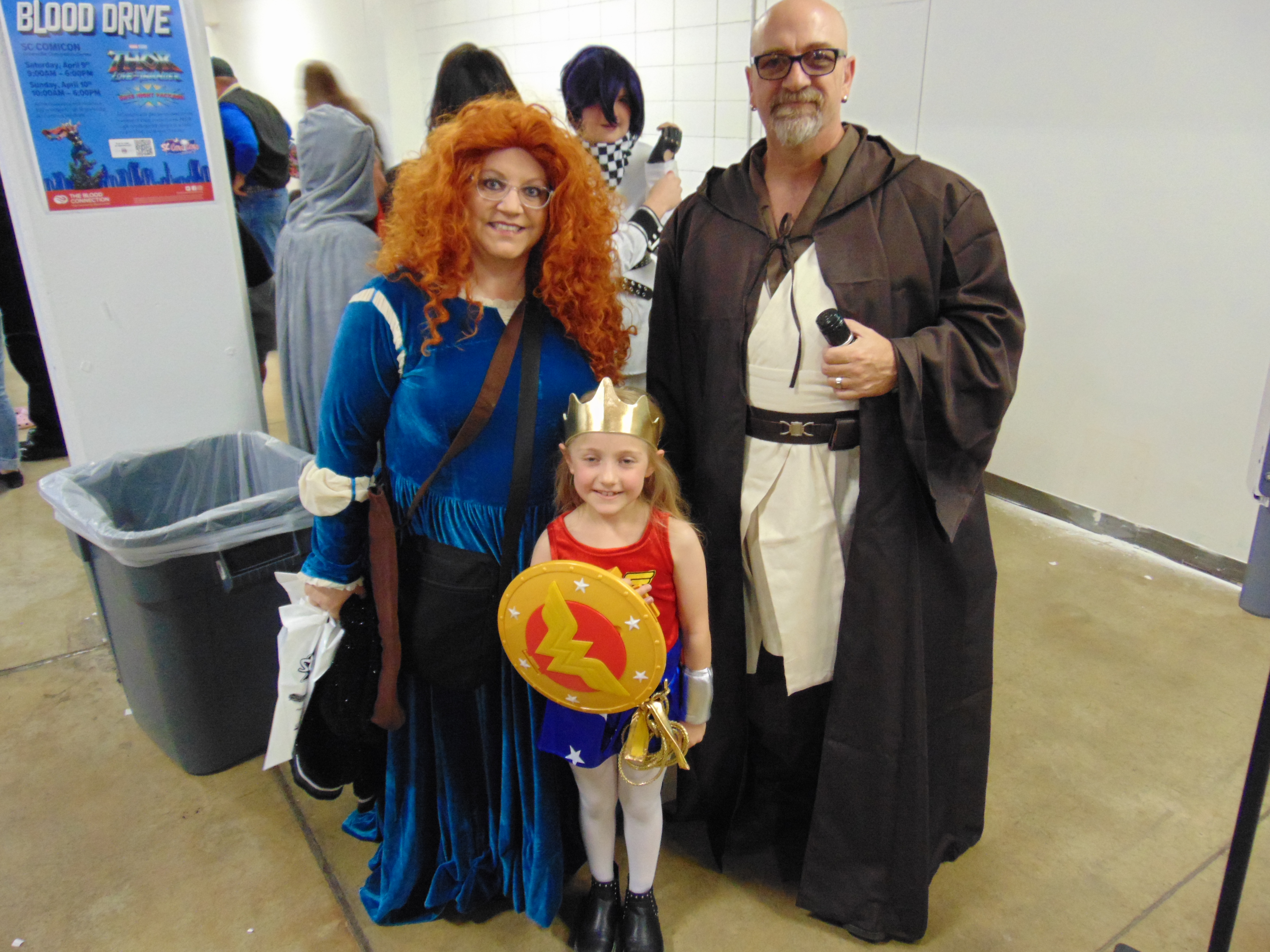
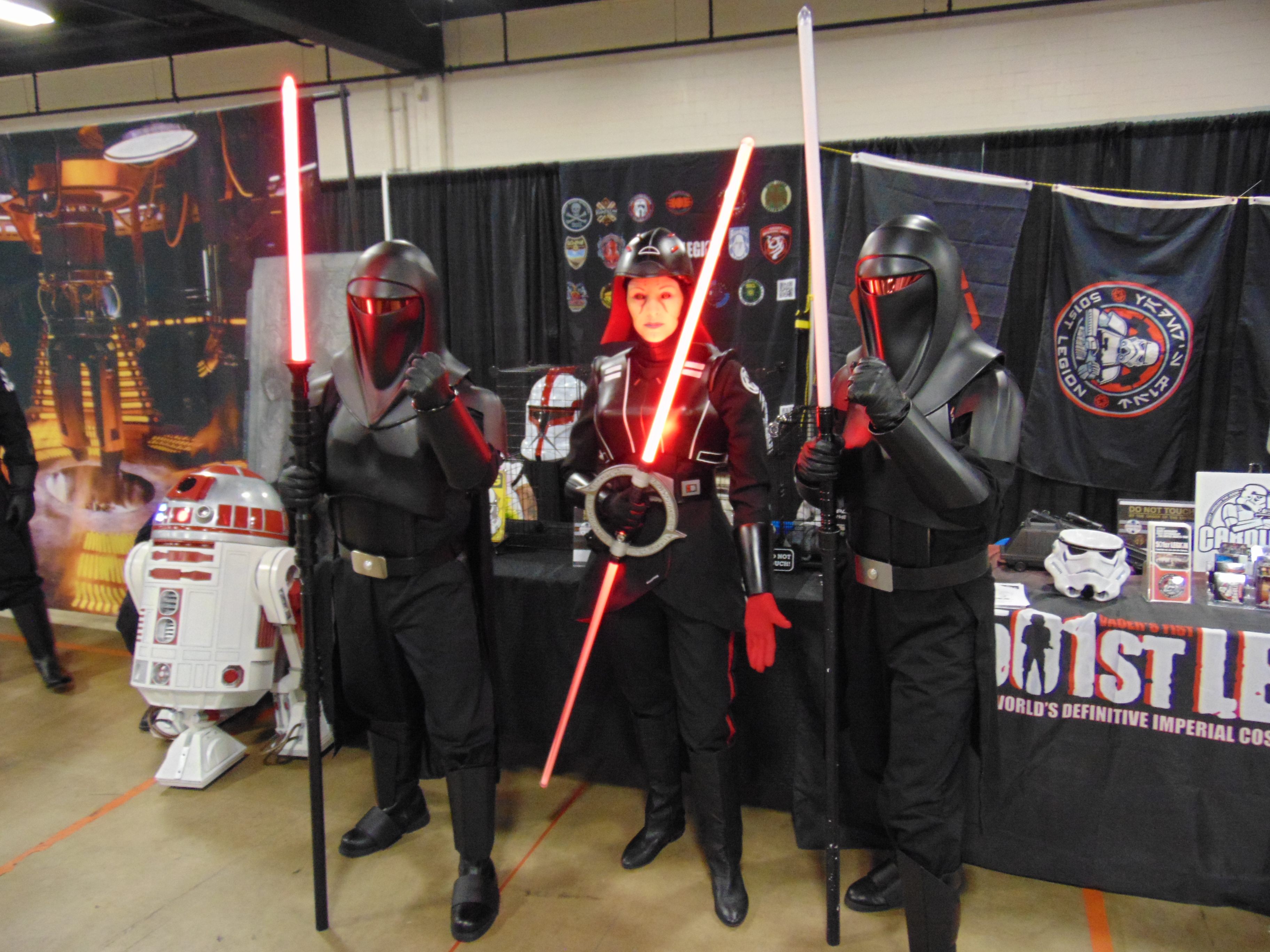
My thanks to all of the wonderful cosplayers, fursuiters, and assorted fandom fans who made this experience as amazing as always. Its always a joy hanging out with these outstanding people who share my love for various fandoms that we all have in common.
Tuesday, April 12, 2022
South Carolina Comicon 2022
My thanks to all of the wonderful cosplayers, fursuiters, and assorted fandom fans who made this experience as amazing as always. Its always a joy hanging out with these outstanding people who share my love for various fandoms that we all have in common.
Sunday, April 10, 2022
General Robert E. Lee's Farewell Address To His Soldiers
![]() |
| "We Still Love You, General Lee!" By artist Mort Kunstler |
Headquarters, Army of Northern Virginia, 10th April 1865.
On Monday, April 10, 1865, Confederate General Robert E. Lee issued his Farewell Address (also known as General Order No. 9) to the surviving remnants of the Army of Northern Virginia the day after he surrendered the army to Lt. General Ulysses S. Grant at Appomattox Court House.
The text of the order, which were written and drafted by Lee's aide Colonel Charles Marshall, were edited and finalized by Lee the night before, then delivered to the army the next morning.
Thursday, April 07, 2022
Tuesday, April 05, 2022
Happy First Contact Day -- April 05, 2063
On this day 41 years from now, on the evening of Thursday, April 5, 2063, a Vulcan T'Plana-Hath Class Surveyor ship landed near a former U.S. military missile complex outside of the town of Bozeman, Montana. This historic event for the human race occurred just hours following another historical event -- the flight of the Phoenix, the first human-made, manned warp spacecraft to achieve faster-than-light speed using an experimental warp drive.
The Phoenix, constructed using a derelict USAF ICBM rocket with a titanium casing, was the revolutionary work of Dr. Zefram Cochrane, the human inventor of warp drive, with the assistance of his partner and fellow engineer, Lily Sloane.
On April 5, about 11 A.M. (MST) the Phoenix took off from a missile silo with Dr. Cochrane in the pilot's seat and two co-pilots: Georgi LaForge and William Riker. The first stage of the craft used traditional chemical-fueled rocket engines. First-stage shutdown and separation was performed in orbit. The nacelles were then extended and the warp core and plasma injectors
were brought online. It took several
seconds to accelerate to critical velocity and then the Phoenix achieved light speed (Warp 1).
*The flight of the Phoenix attracted the attention of a passing Vulcan survey ship, the T'Plana-Hath, causing the Vulcans, in accordance to procedure, to officially make First Contact with the human race.
The ship landed near the complex outside of Bozeman where the captain of the T'Plana-Hath, Commander Solkar, formally greeted Dr. Cochrane with the traditional Vulcan salute, "Live long and prosper." This would be responded by a simple handshake and a thanks from Cochrane.
The Phoenix would later be put on permanent display in the Smithsonian Air and Space Museum in Washington, D.C.
The successful flight of the Phoenix would later lead to the founding of Starfleet in 2130 and innovations in the original warp engine designs based on Dr. Cochrane's work would carry on into the next century with the creation of starships with faster engines that would lead the human race into deep space and further contact with other lifeforms and new civilizations.
Even more important, the first official meeting between humanity and the Vulcans would form the beginnings of a formal alliance that would grow to become the United Federation of Planets (UFP) founded in San Francisco in 2161.
In the spirit of universal peace and prosperity, this blogger would like to wish each and every one of y'all a Happy First Contact Day today -- and my prayers that such a hopeful future may be more than just a work of excellent science fiction someday.
* Though First Contact Day is remembered by humanity as the day human beings were first introduced to the Vulcan people, a Vulcan survey ship crashed on Earth near Carbon Creek, Pennsylvania, USA in 1957 while observing the Soviet satellite Sputnik -- the first artificial human satellite launched into Earth's orbit. The surviving crewmen allegedly lived on Earth for several months awaiting rescue, remaining incognito in order to avoid "cultural contamination with a primitive species" and posing as human travelers near the small town.
There is also anecdotal evidence that other extra terrestrials have also visited Earth in the years and centuries prior to First Contact, perhaps even as far back as early human history, or even pre-human history.
This blogger would like to thank the outstanding fans of the Star Trek franchise for the information used in this article, especially the folks at Memory Alpha.
Monday, April 04, 2022
Night Sky Photography -- 04-04-2022 -- Saturn & Mars Conjunction In The Morning/Luna & Pleiades In The Evening
Good evening, fellow stargazers!
Early this morning, I was able to capture a couple of great photos of the conjunction between the planets Saturn and Mars about an hour before sunrise.
The three planets will remain close to each other for the rest of the month of April, and will be joined by Jupiter lower towards the rising sun. By the middle of the month, around the 14th and 15th of April, the four planets will appear in a parade following the ecliptic in the early morning sky. This blogger will do his best to try and get a great shot of that event.
As morning made way to evening, I captured another beautiful shot of the Young Crescent Moon together in the sky with the Pleiades Star Cluster and the larger nearby Hyades Star Cluster in the Constellation Taurus The Bull in the western sky.
Located about 153 light years (47 parsecs) from the Sun, the Hyades is the nearest and one of the best-studied star clusters. From the perspective of observers on Earth, the brightest stars of the Hyades Cluster appears in the form of a V shape as the head of the bull along with the still-brighter Aldebaran, which is actually unrelated to the Hyades, as it is located much closer to Earth and appears along the same line of sight.
The Pleiades by contrast are about 444 light-years (136 parsecs) from the Sun and its brightest seven stars (also known as the Seven Sisters) are more tightly packed together in a small dipper.
Together the Hyades and the Pleiades both form another asterism referred to as the Golden Gate of the Ecliptic where all the planets of our Solar System and the moon travel across the night and morning sky, passing between these two star clusters which form the two posts of this virtual gate at the two sides of the ecliptic line.
Well folks, I hope y'all enjoyed my planetary and night sky offering for this evening. Please let me know what y'all think in the comments below, as well as any information I might have left out.
Until next time be sure to keep your eyes to the skies, y'all hear!
Sunday, April 03, 2022
Night Sky Photography -- 04-03-2022 -- Constellation Canis Major "The Greater Dog" & The Winter Triangle
Good evening, fellow Stargazers!
This evening I was able to capture a really good shot of all the major stars of the Constellation Canis Major "The Greater Dog" low in the southern sky about an hour, or so, after sunset. The second photo is a great shot of the Winter Triangle asterism.
According to the stories, Canis Major and Canis Minor are the hunting dogs of Orion, and the Winter Triangle connects them.
The Winter Triangle surrounds most of the very faint Constellation Monoceros, although its brightest stars are fourth magnitude and hardly noticeable to the naked eye without a really good telescope lens.