Showing posts with label Fall Photography. Show all posts

Thursday, November 14, 2024

The Yellow Garden Spider

Yellow Garden Spider (Argiope aurantia).
Photo taken by blog author C.W. Roden on 11-11-2024.

Hello Y'all!

I'm a female Yellow Garden Spider, or Argiope aurantia. I'm a North American arachnid and largely active in the fall months. You can find me everywhere in North America from southern Canada to Central America.

Okay, I know I'm a big spider and I look really scary, but I'm very beneficial to the environment, especially to your flowers and gardens. I often build my large webs in areas near sunny fields away from the wind, or along the eaves of houses and storage buildings.

More often I like to spin my beautiful large silky webs in tall vegetation like those in your garden, but please don't worry! 

I may look poisonous with my beautiful black and yellow stripes, but my bite is not dangerous to humans.

I eat flies, mosquitos, wasps, aphids, and other harmful bugs. I stay outside and I'm largely active during the daytime. I'm not aggressive to humans, birds, or other animals. I'll even shake my large web at you to make it obvious if you get too close.

So now that y'all know that, please don't kill or hurt me, even if you don't like spiders. We may not be best friends, but I'll help out around your garden if you please let me stay there.

Saturday, September 30, 2023

Red Spider Lilies, Yellow Butterflies & Red-Shouldered Hawk All Herald Autumn In South Carolina

Red Spider Lilies and Yellow Butterflies are common in the
Carolinas during the beginning of the autumn months following
the fall equinox.

As the month of September comes to an end here in upstate South Carolina, autumn begins to make its presence known. Although most of the trees have yet to change into their glorious red, yellow, and orange fall colors, some leaves have already begun to fall. Yet there are already other signs that signal that the autumn season has finally officially arrived.

This afternoon while I was cutting my lawn -- for what will thankfully be one of the last times for this year -- I had to leave one little patch of my yard uncut to preserve the newly sprouted Red Spider Lilies
(Lycoris radiata) that sprout up every late September and early October here.

The red spider lily -- named so because of its beautiful bright red color and umbels that look like spider legs -- are also referred to along the eastern coastal areas of the United States as Hurricane lilies because they often bloom after first fall hurricanes.

Outside of the American Southland, the red spider lily is often commonly called the Schoolhouse Lily because it blooms when school has started. Other names for this fall flower include:
Red Magic Lily, Corpse Flower, Resurrection Lily, and the Equinox Flower.

Like the dreaded Kudzu vine, the Red Spider Lily is not native to the South, but rather comes from eastern Asia; possibly Japan or China.
In Japan the red spider lily is called the "Flower of Death"; its bright red color said to guide souls into the afterlife. The Japanese common name for this flower is higanbana (which literally means "flower of higan" -- a Buddhist holiday around the autumn equinox). In Chinese culture, the red spider lily is an auspicious symbol that represents beauty.

Today, the red spider lily can be found growing in the early fall throughout the Southern United States from the Carolina and Florida to eastern Texas and Oklahoma.


Believe it or not, this seasonal flower also has a connection to the South's Confederate historical heritage.


Its believed that the red spider lily was introduced to America by Captain William Willis Roberts (1822-1875), a Southern-born botanist from New Bern, North Carolina and friend of explorer Commodore Matthew Perry of the U.S Navy. Roberts -- then a First Lieutenant in the U.S Navy -- first introduced the plant to America sometime around 1854; bringing three bulbs home from Japan and gifting them to
his young sister-in-law, Lavinia Ellis Cole Roberts (1833-1923), for her extensive New Bern garden.

Captain William W. Roberts served in the United States Navy from 1839-1860 when he resigned following the secession of North Carolina at the start of the War Between the States (1861-1865) and took a commission in the Confederate States Navy (CSN) serving as a Lieutenant on three ships -- CSS Charleston, CSS Albemarle, and the CSS Torpedo on the James River near the end of the war
.

Today his grave, located in his native New Bern, North Carolina, has red spider lilies that grow every autumn around his grave marker, a beautiful tribute to the man who introduced this plant to America.

The grave of C.S. Captain William W. Roberts (1822-1875) at
Cedar Grove Cemetery, New Bern, North Carolina.
Red spider lillies grow at his grave every fall.
Photo courtesy of Find-A-Grave.com.

Like the Kudzu vine, the Red Spider Lily is Just about every yard in my small Southern town has at least one patch of wild Red Spider Lilies that pop up out of the blue this time of year. Sadly they don't last more than a couple weeks, or so. That's what makes this surprise flower so interesting and precious to see every year here in Dixie.

The following are the photos I took of the small patch of Red Spider Lilies under the tree in my front yard:


Y'all might have noticed the small, yellow-green butterfly in the last two photos above -- the last one capturing the little beauty in flight.

This beautiful yellow butterfly is the Cloudless Sulphur (Phoebis sennae) common to most of this part of the eastern United States and America from Argentina to southern Ontario, Canada, especially in late summer and early fall.

In addition to capturing this lovely lady in flight (you can tell by the markings on the wings she's a female) I was about to get a great close-up of her on one of the lilies. 


As I finished giving my front lawn its first official sheering of the autumn season, in addition to the cries of my feral cats for their food, I also heard another cry coming from the trees across the road in my neighbor's back yard. I retrieved my camera and located the source of the crying -- a female Red-Shouldered Hawk (Buteo lineatus)perched high on a branch.

An extremely vocal bird, this apex predatory bird is well known in the Eastern United States and Appalachia all year around. 

I managed to capture a few great (mostly clear) shots of this lovely beauty as well.


Please let me know what y'all thought of this post below, and as always have a wonderful Dixie Day, and y'all come back now, you hear!

Sunday, November 18, 2018

Hiking Crowders Mountain

Greetings and Salutations, y'all!

On Saturday, November 18th, I traveled with my sister Olivia, her boyfriend Brian, and my two nephews: J.T. and Caleab, up to North Carolina and back to Crowders Mountain State Park

Now as y'all know, the last several autumns I have traveled to Crowders Mountain State Park and been up both peaks before, as y'all have seen in previous posts HERE and HERE. I've also told y'all several personal stories about my yearly visits there as well. 

Once again I was traveling there to take pictures of the autumn leaves from the peak of the mountain, but this time I had plenty of company with me. It was my nephew's first trip to Crowders Mountain and I am pleased to say they really enjoyed the experience. 

It was a clear and not too cool day with high temperatures at around 58F with only a little breeze. A nice hike and a good warm light hoodie were more than enough when we stopped to take a view at Crowders' peak at 1,625 feet above sea level. 

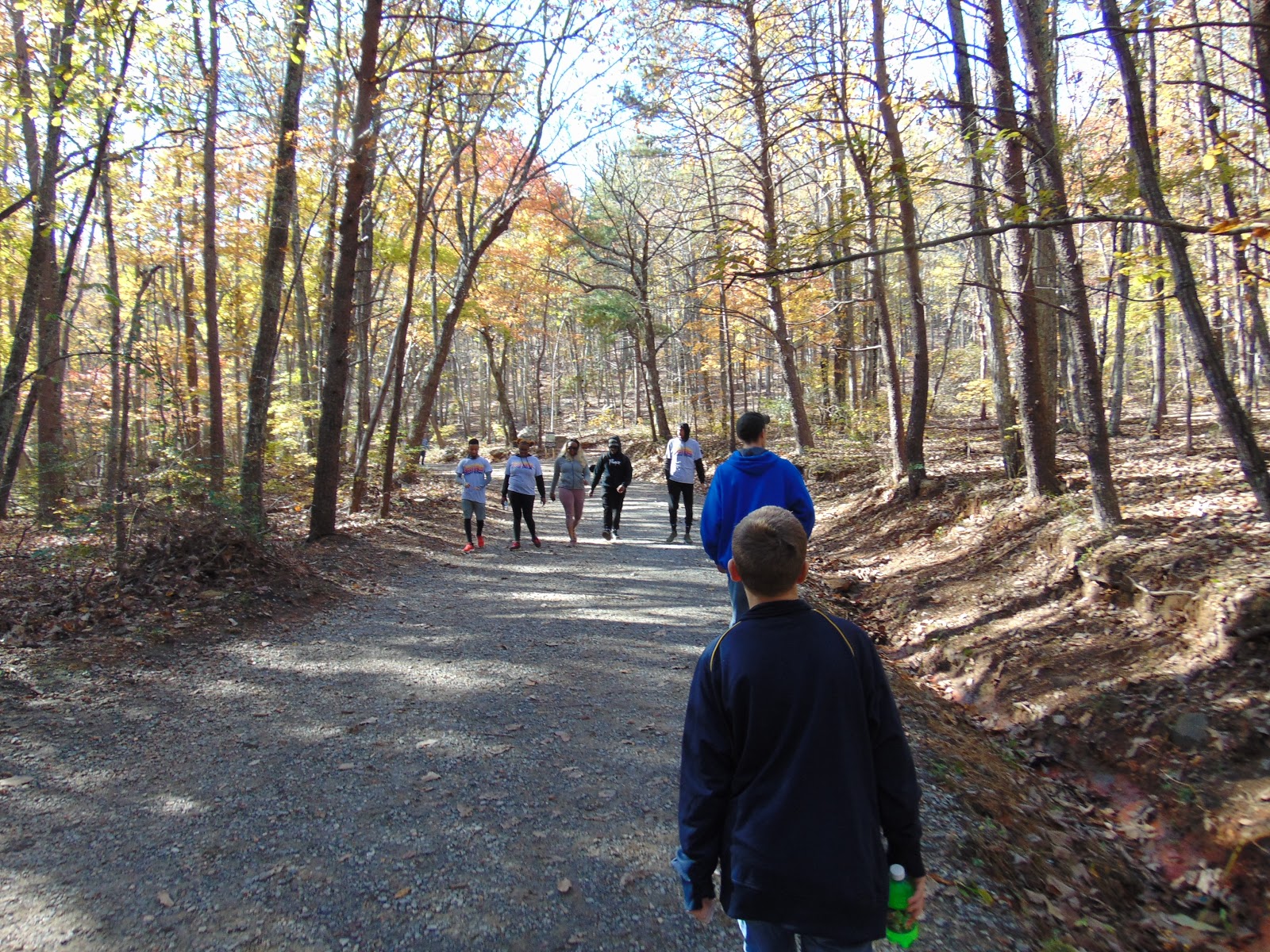
The following are photos of the hike and the outstanding view from the top of the mountain -- as well as an unexpected shot of the moon over the distance city of Charlotte, North Carolina.


My nephew J.T. pretending he's a beaver.
A neat Little Free Library in the visitor's center
museum.
Crowders Mountain in Gaston County, between Kings
Mountain and Gastonia, North Carolina.
Caleab, Brian and Olivia.
J.T. and Caleab posing.
Beautiful shot of the cliffs and the fall foliage.
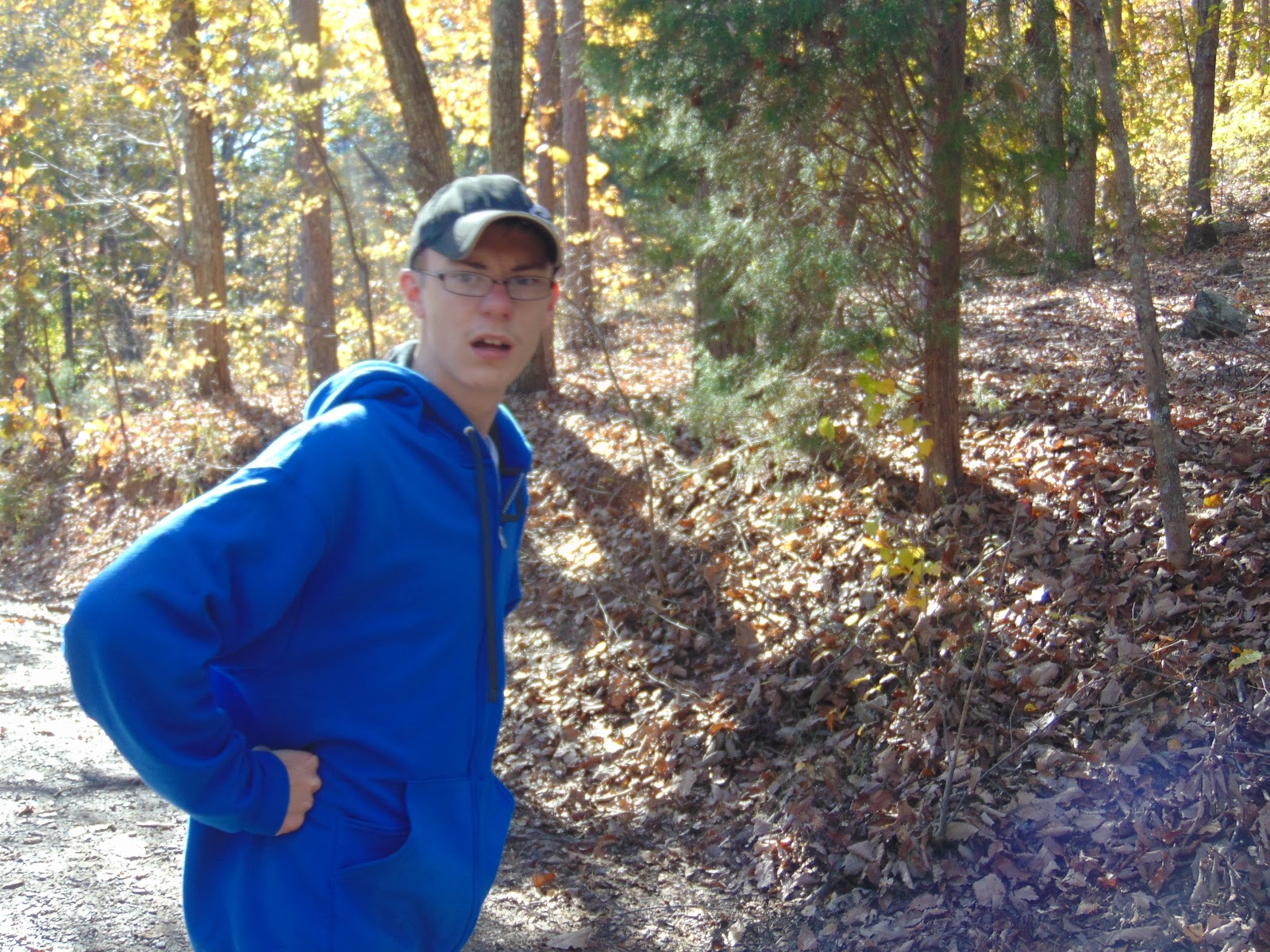
LOL they don't make teenagers like they used to!
Radio towers at the top of the mountain.
The tallest tower on the mountain is owned by
CBS Communications and rises 268 feet.
Olivia and J.T. checking out the view from the
safety of the large rock formation. Charlotte can
be seen on the horizon in the distance.
Close up of Charlotte though the haze of the smog.
This neat looking rock formation resembles
petrified wood.
This is the boulder where your favorite blogger
once preformed a bit of naturalism on a rainy summers
day a decade ago.
I will tell that story in my next blog post. Stay tuned.
Panoramic shot of the eastern view top of Crowder's Mountain -- including views of the City of Gastonia on the left and Charlotte in the distance.
A group shot at one of the boulders on top of the
overlook.
Yours truly enjoying a much needed lunch break.
And yes, that is about as close as I would allow
myself to get to the edge!
Ugh! People....Proof that some folks have neither
respect for natural beauty, nor support the
conservation of beautiful sites for everyone to
enjoy.
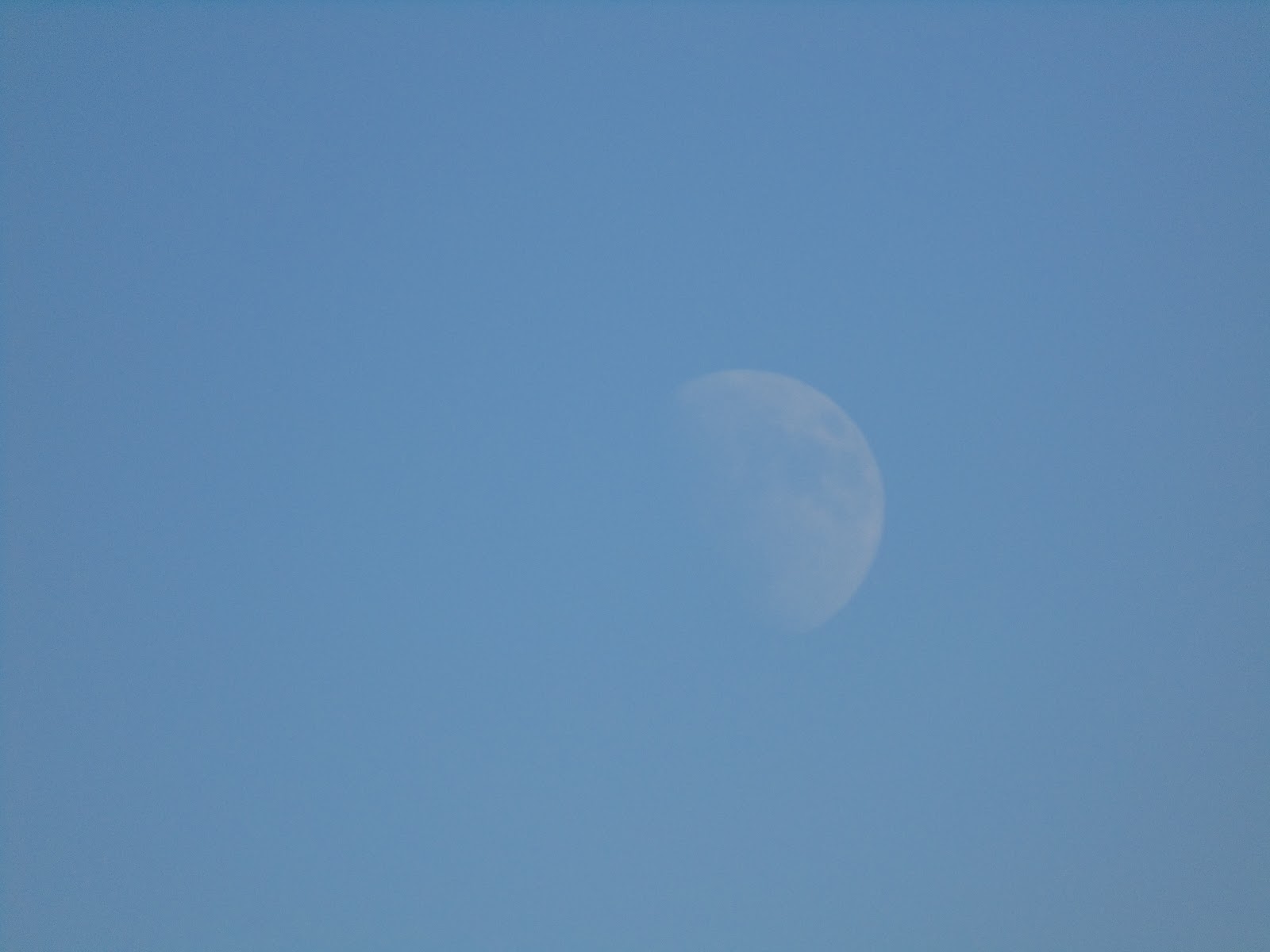
Just as I was about to leave, I took what I thought
would be one last shot of the horizon and found
that the moon had already risen!
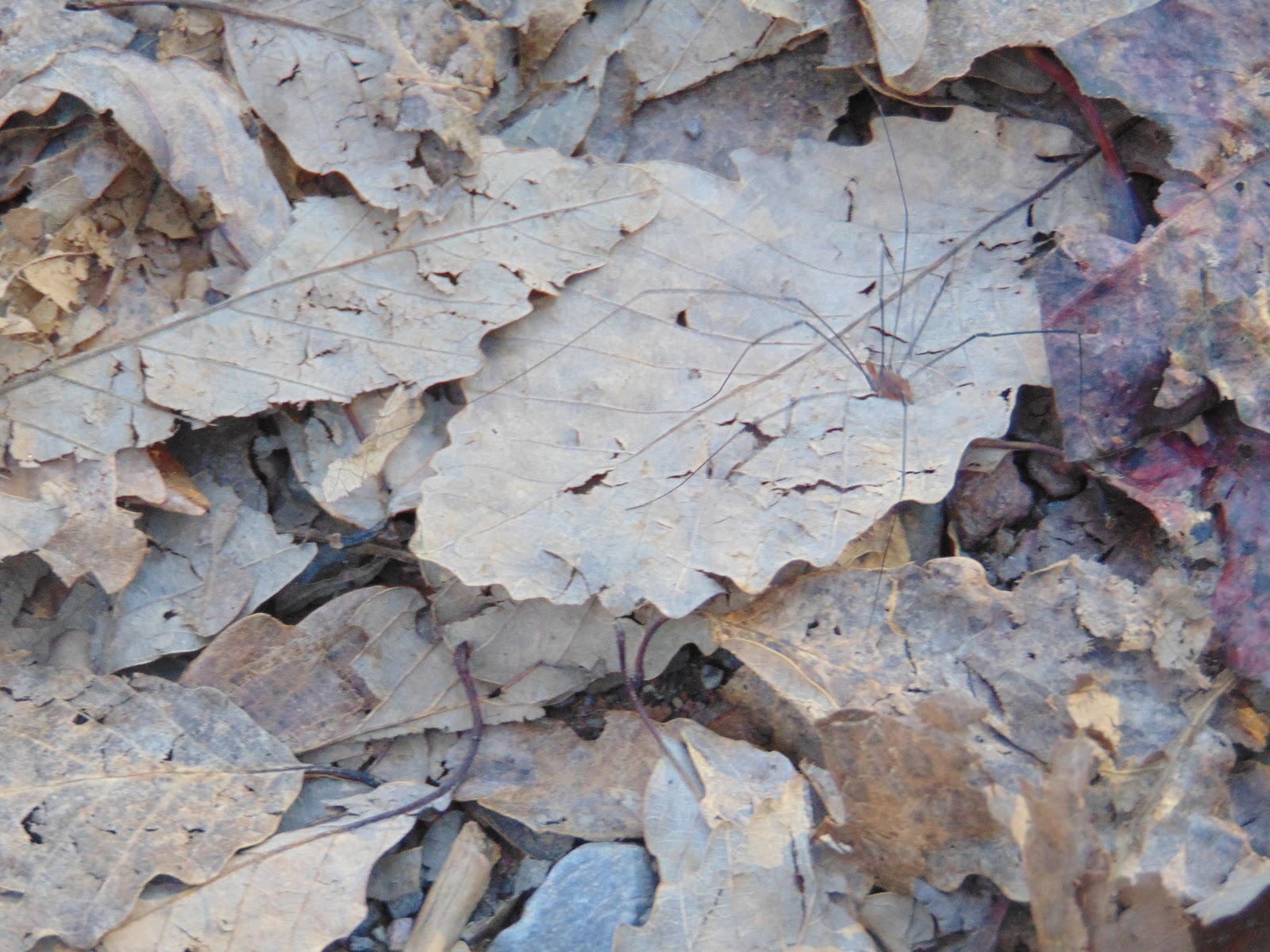
Oops, almost stepped on this Daddy Long-legs
Pholcidae. He blended in really well with the
dried fall leaves.
Which way are we going guys?


After taking the stairs back down and the shorter trail back to the van, we went to nearby Gastonia, North Carolina, and had a well deserved supper at Golden Corral. The hike was a great workout, and the views were worth it -- as were the excited expressions on my nephew's faces from something other than video games, LOL!

Well folks, I hope y'all enjoyed my photos as much as I enjoyed taking them for all of you. As always have a wonderful Dixie Day, and y'all come back now, ya hear?


This blogger is a proud contributor to the Friends of Crowders Mountain. For more information about Crowders Mountain State Park and how you can help contribute to maintaining the natural beauty of this Appalachian heritage site, please visit the Friends of Crowders Mountain website in the link provided on this blog page.