|
Historic Bethel Presbyterian Church in Clover, South Carolina.
|
Founded in 1764 Historic Bethel Presbyterian Church in the town of Clover is the oldest church in York County, South Carolina.
The church's congregation was
organized by the Reverend William Richardson, who was instrumental
in the formation of four other Presbyterian congregations in the South
Carolina Upcountry. Richardson was a minister of the Old Waxhaw Presbyterian Church in Lancaster County, South Carolina, to service the burgeoning Scots-Irish population on the western side of the Catawba River.
The Bethel Presbyterian Church
Cemetery contains approximately 3,500 gravestones and monuments in a large well-tended cemetery that covers three acres of a ridge on the
property's east side enclosed by a stone wall. The earliest of these gravestones dates back to 1774.
The
congregation's current sanctuary was built during the summer of 1873,
and is the
church's fourth building. It was added to the National Register of Historic Places in 1980.
In 2014 the church celebrated its 250 anniversary.
 |
The current church structure built in
1873 was added to the National
Register of Historic Places in 1980. |
Buried in the church cemetery are
members of Bethel Presbyterian Church who served in the
American Revolutionary War (1775-1783), War of 1812 (1812-1815), War Between The States (1861-1865), World War I *(1917-1918), and World War II *(1941-1945).
*Writer's note: these dates coincide with U.S. involvement in these conflicts rather than the actual length of the wars themselves.
There is a total of fifty-two men buried in the cemetery who fought
during the American Revolution such as Colonel Samuel Watson, Colonel
William "Billy" Hill, Colonel Thomas Neel, and his three sons: Thomas Neel,
Jr, Andrew Neel, and John Neel. Other Revolutionary War veterans buried
at Bethel include Colonel Joseph Howe, Captain William Davis, Captain
Peter Clinton, David Jackson, Dr. William MacLean, and Pioneer Henry
Craig. About twenty-one of the Revolutionary War soldiers buried at Bethel
fought with other Patriot militia at the decisive Battle of Kings Mountain on October 7, 1780.
Five soldiers of the War of 1812
are buried in the cemetery, along with seventy-six American Civil War soldiers,
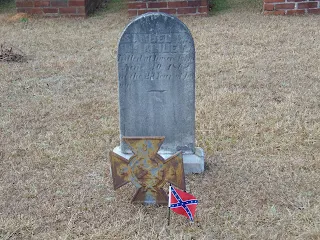
and a large number of WWI and WWII soldiers. Most of the Civil War soldiers are Confederate veterans with their graves marked with iron Confederate cross of honor markers.
Also interred in the cemetery is Reverend Samuel Watson, minister at
Bethel for forty-two years (1840-1882), and Reverend James S. Adams,
stated supply minister at Bethel for twenty-nine years (1811-1840).


 |
| A nice fieldstone wall surrounds the churchyard. |
 |
Revolutionary War monument honoring 52 Patriots buried in the
cemetery at Bethel Presbyterian Church.
This monument was erected by the South Carolina Society
Daughters of the American Revolution (SCDAR) and the
Bethel Cemetery Association in March 2009. |
Colonel Samuel Watson was an influential member of Bethel
Presbyterian Church, as
well as a highly respected in the community. When talk of rebellion
became
general, Watson quickly rose to support the cause of American
Independence. Watson was elected to the
South Carolina Provincial Congress of 1775-1776 and participated in the
framing of South Carolina's first constitution. Later in 1780 he served
as a member of the New Acquisition District (York County, SC) Militia
and as an officer under General Thomas "Gamecock" Sumter's command.
Colonel Watson
was the grandfather of Rev. Samuel Lytle Watson, Pastor of Bethel
Presbyterian Church for 42 years.
A slave cemetery
is located at the church property's eastern boundary, outside of the
rock wall. Many of these were members of the church's congregation from the late 1700s till after the War Between The States.
According to a Ground Penetrating Radar (GPR) Survey
completed in 2013, there are
approximately seven areas of burials in the slave cemetery, each marked with small, painted steel crosses.
A stone memorial was dedicated to those buried here in 2016.
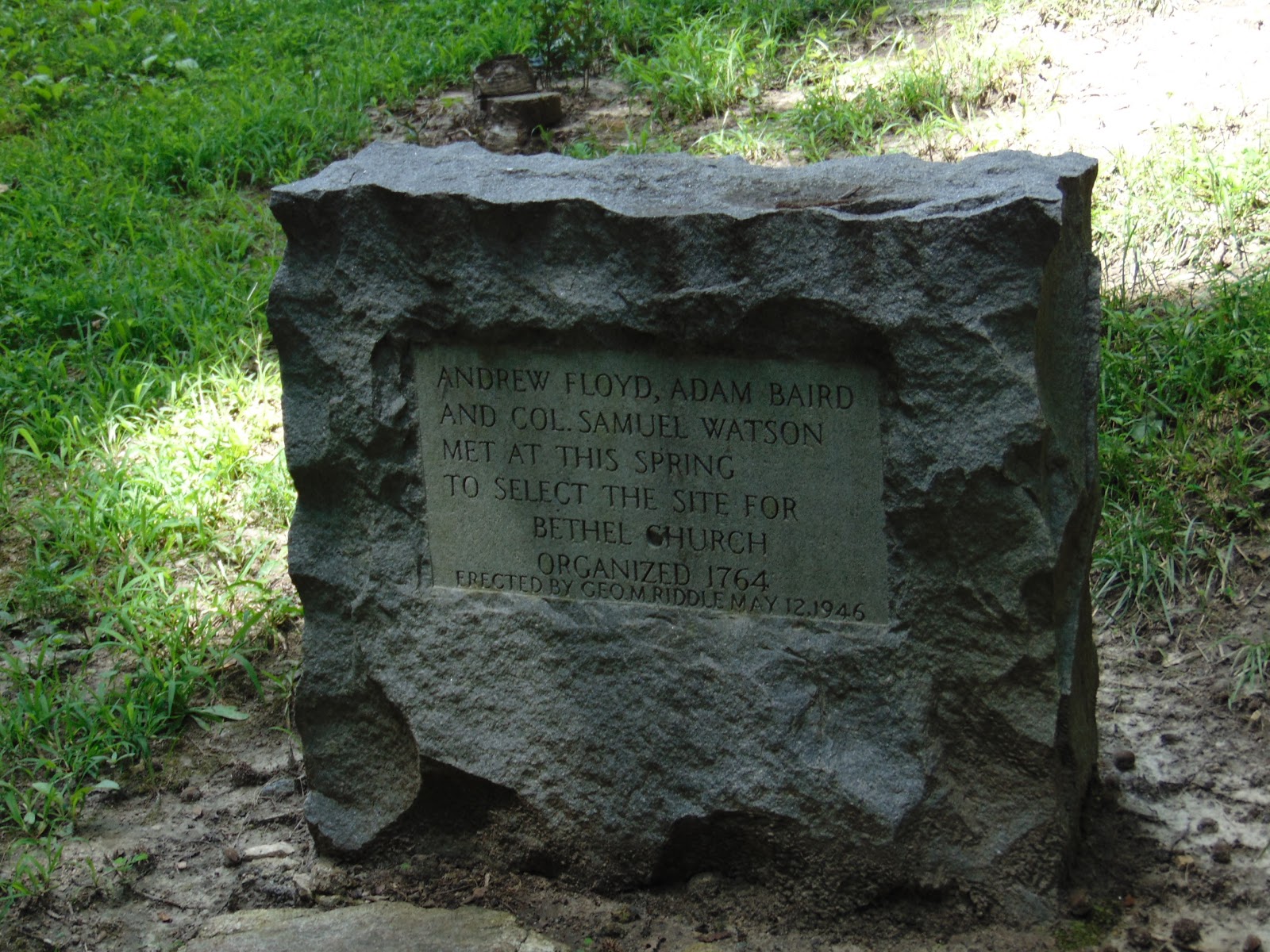
Located on the property is an old spring where a stone marker tells where the site of the original church building was determined. The old cemetery also features some excellent examples of late 18th century and 19th century antique grave stones. Many of the names and places of birth on the oldest stones show Scots-Irish ancestry.
 |
Confederate Cross Of Honor markers in front of veteran's graves.
|
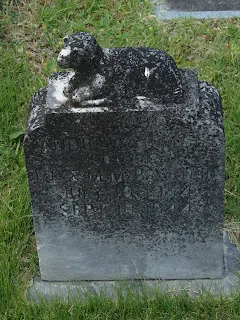 |
The grave of a newborn baby.
Note the lamb on top of the stone. |
In 1764, Thomas Neel was one of four men to select a site for Bethel
Presbyterian Church and was elected one of its first elders. He was
elected to the North Carolina General Assembly from the former Tyron County.
The records of North
Carolina show that he served on several committees, in the assembly, also
as a petitioner on roads and ferrys, certifier of accounts, petitioner
on land grants, as surety. He recommended McDowell and advised retreat
before regulators. He was one of the magistrates, who served as Judges
of Tyron Court from 1769 to 1772. He served as justice of the peace and
as a judge of Tyron County between 1769 till 1772 when he served on the Boundary
Commission that drew the North Carolina/South Carolina boundary line west of the Catawba River.
Neel was a member of the first delegation sent by the New
Acquisition District (now York County, SC) to the South Carolina Provincial
Congress in 1776. He was granted 779 acres located near the Catawba
River.
The first recorded military venture in which Neel
participated was in Royal Governor William Tyron's expedition against the North Carolina Regulators
in the Battle of Alamance on May 16, 1771. In this campaign he bore the rank of Captain
and commanded the Tryon County troops.
A few years later, now Colonel Neel
commanded the Patriot militia of the New Acquisition District during the Snow Campaign of 1775 and fought at the Battle of The Great Canebrake on December 22, 1775 against Loyalist forces under the infamous Tory Captain Patrick Cunningham. He later served during the Cherokee War of 1776. Colonel Thomas Neel's last military expedition was
in the defense of Charleston in the spring of 1779 where he gave his
life defending American Independence at the Battle of Stono Ferry on June 20, 1779.
 |
The grave and SAR marker for Colonel Thomas Neel (1730-1779) of the
New Acquisitions District Regiment of Patriot militia.
Served from the Snow Campaign in 1775 until his death at the
Battle of Stono Ferry on June 20, 1779.
Buried beside him are his three sons who also served during the
Southern Campaign of the American Revolutionary War. |
His three sons: Thomas Jr., John, and Andrew also served in the local militia during the Southern Campaign of 1780-1781 fighting British occupation of South Carolina. Like their father, all three of them gave their lives in defense of American Independence.
Lieutenant
John Neel (1762-1778) was killed at the age of 16 serving with Col.
Joseph Hayes' 5th Regiment in Georgia near Savannah.Andrew rose to the rank of Colonel and commanded militia troops from modern-day York and Chester Counties under General Thomas "Gamecock" Sumter. He was killed at the Battle of Rocky Mount on August 1, 1780.
Andrew's twin brother, Lieutenant Colonel Thomas Neel Jr., was killed in 1781, possibly at the Battle of Cowpens on January 17, 1781.
These men are all buried in the churchyard at Bethel Presbyterian Church.
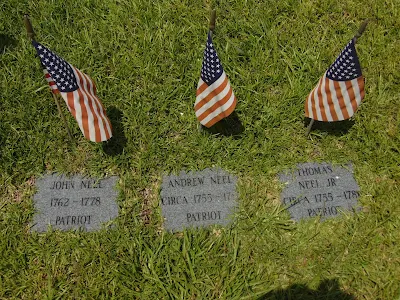 |
The sons of Patriot militia Colonel Thomas Neel:
John (1762-1778), Andrew (1755-1780), and twin brother
Thomas Jr. (1775-1781).
|
William "Billy" Hill was born in 1841 a native of Ireland. His family moved to South Carolina and by age 40 Hill he was a local militia leader who owned an iron foundry at nearby Allison Creek in York District where he made cannon for the Continental Army.
Hill's Iron Works were destroyed on June 17, 1780 in a raid by British Provincials commanded by Captain Christian Huck of Tarleton's British Legion. Hill served under General Thomas Sumter and took part in several battles of the Southern Campaign including the Battle of Huck's Defeat (Williamson's Plantation) on July 12, 1780 and with Sumter throughout the rest of the war.
After the war, Hill became the first State Senator from York County to the South Carolina State Legislature. William Hill was also the paternal grandfather of Confederate Major General Daniel Harvey Hill.
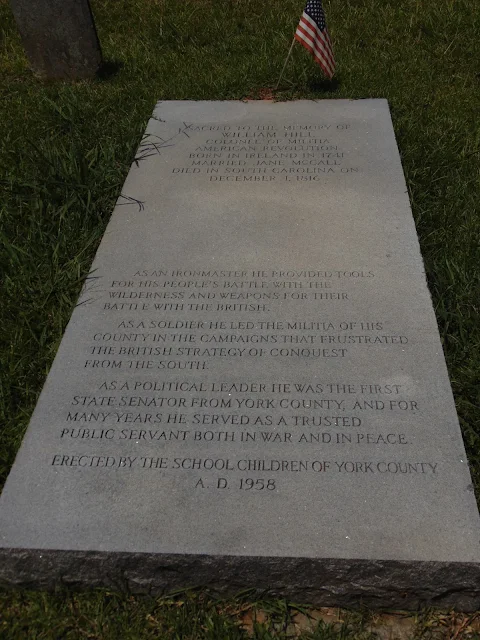 |
The grave of Patriot Colonel William "Billy" Hill (1741-1816)
who led local militia at the Battle of Huck's Defeat on July 12, 1780.
|
Historic Bethel
Presbyterian Church & Cemetery is located at 2445 SC Highway 557 in Clover, South Carolina.